
Standing at the corner of Lecky Road in Derry’s Bogside, a simple gable wall bears one of the most powerful slogans in Irish history. The Free Derry Wall, with its bold black lettering declaring “You Are Now Entering Free Derry,” represents far more than painted words on stone. This iconic wall serves as a living memorial to one of the most significant periods in Northern Ireland’s civil rights struggle and continues to inspire movements for freedom and justice around the world.
From its creation during the tumultuous early January days of 1969 to its current status as both a tourist attraction and active symbol of resistance, the Free Derry Wall tells the story of a community’s determination to control their own destiny. Whether you’re planning to visit this historic landmark or seeking to understand its profound significance in the broader context of civil rights movements, this comprehensive guide explores every aspect of the wall’s remarkable history and enduring legacy.
What is the Free Derry Wall
The Free Derry Wall is a famous gable wall located at Free Derry Corner, positioned at the intersection of Lecky Road, Rossville Street, and Fahan Street in Derry’s Bogside area. This iconic wall features the slogan “You are now entering Free Derry” painted in distinctive black lettering across its surface, serving as one of Northern Ireland’s most recognizable landmarks and symbols of civil rights.
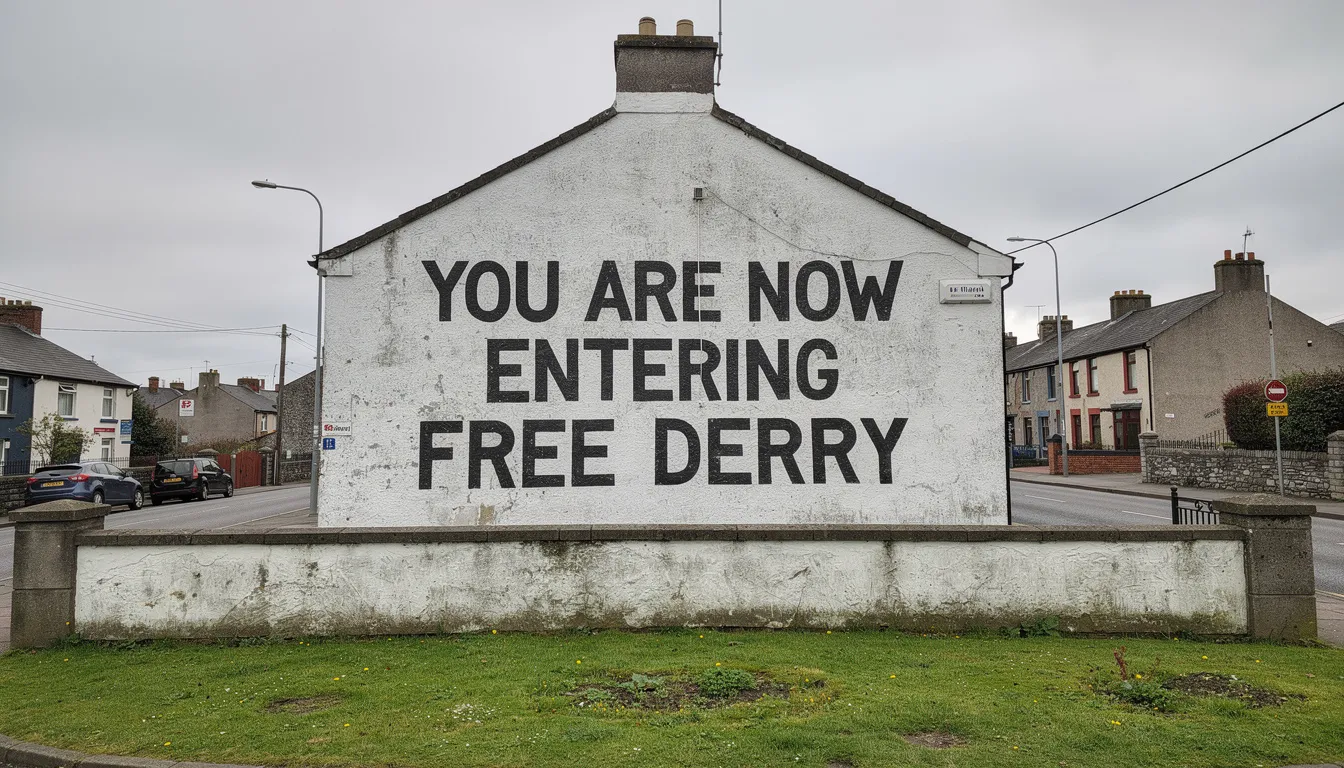
The wall stands as the sole surviving structure from what was once a row of terraced houses, making it a unique architectural remnant of the area’s past. Its prominence at Free Derry Corner has transformed this intersection into a significant destination for both tourists and those interested in the history of Northern Ireland’s civil rights movement. The gable wall’s strategic location at this busy corner ensures maximum visibility, allowing the powerful message to reach thousands of passersby daily.
This memorial represents more than just a painted slogan – it embodies the spirit of a community that declared its independence from British rule and maintained autonomous control for three crucial years. The wall has become a symbol of pride for the local Catholic community and serves as a reminder of their struggle for equality and recognition in Northern Ireland.
The significance of the Free Derry Wall extends beyond its local context, representing solidarity with oppressed communities worldwide and serving as inspiration for freedom movements across the globe. Today, the wall continues to evolve, regularly featuring updated messages of solidarity with international causes while maintaining its core message of resistance and self-determination.
Historical Origins and Creation
The Free Derry Wall’s story begins on January 5, 1969, when local activist Liam Hillen painted the now-famous slogan “You are now entering Free Derry” on the gable wall of a terraced house. This act of defiance occurred just one day after the brutal January 4, 1969 attack on civil rights marchers at Burntollet Bridge, creating a direct connection between the wall’s creation and the escalating tensions surrounding the civil rights movement in Northern Ireland.
The inspiration for the slogan came from an unexpected source – the Free Speech Movement at UC Berkeley, California. This connection to the American civil rights movement demonstrates how local activists drew inspiration from global struggles for freedom and equality. The phrase “entering free berkeley” had become associated with the student protests and free speech demonstrations at the University of California, providing a template that Irish activists adapted for their own resistance movement.

The timing of the wall’s creation was crucial, as it occurred during a period of intense civil rights activism in Northern Ireland. The Catholic community in Derry had been experiencing systematic discrimination in housing, employment, and political representation under British rule. The painting of this slogan marked a symbolic declaration that the Bogside area would operate outside the control of the Northern Ireland authorities.
Following the January 4 attack at Burntollet Bridge, where civil rights marchers were ambushed by loyalist counter-protesters while police looked on, the mood in Derry’s Catholic community had shifted from peaceful protest to more militant resistance. The Free Derry Wall became the focal point of this new phase of the struggle, marking the beginning of what would become a three-year autonomous area that operated independently of British state control.
The wall’s creation was not an isolated incident but part of a broader pattern of community organization and resistance. Local residents began organizing their own security patrols and establishing alternative governance structures, with the painted slogan serving as both a boundary marker and a declaration of independence from what they viewed as an illegitimate colonial authority.
The Free Derry Autonomous Zone
From 1969 to 1972, the area around the Free Derry Wall functioned as a self-declared autonomous nationalist area, operating largely independently of British state control. This three-year period represents one of the most remarkable experiments in community self-governance in modern Irish history, with the wall serving as the symbolic gateway to this liberated territory.
The autonomous zone encompassed primarily the Bogside and Creggan neighborhoods, areas with predominantly Catholic populations that had experienced decades of discrimination under Northern Ireland’s unionist-controlled government. Within this area, the community established its own systems of law and order, with volunteer “peace corps” organized by community groups patrolling streets and manning barricades to prevent police re-entry.
During stable periods, the autonomous zone operated with surprisingly sophisticated governance structures. Crime rates within Free Derry were remarkably low, with disputes resolved through community leadership rather than formal legal mechanisms. When infractions occurred, punishment typically consisted of stern lectures from community elders on the need for solidarity, demonstrating the effectiveness of informal justice systems rooted in community values.
The zone’s infrastructure evolved significantly over its three-year existence. What began as simple barricades constructed by community residents in early January 1969 eventually expanded to include petrol bomb “factories,” first aid posts, and even a radio transmitter called “Radio Free Derry” that broadcast messages calling for resistance and coordinating community activities.
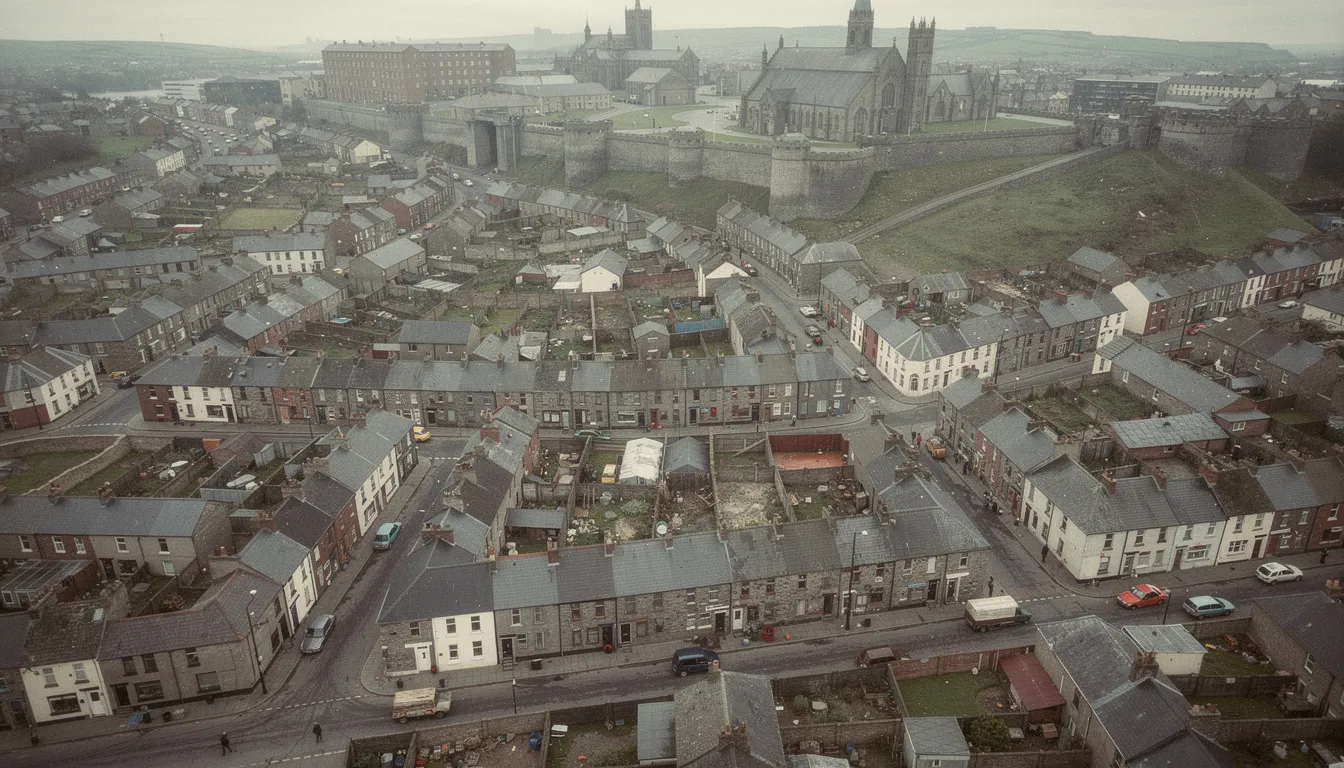
The end came on July 31, 1972, with Operation Motorman, when 21,000 British troops, supported by tanks and bulldozers, invaded nationalist working-class areas to dismantle no-go zones throughout Northern Ireland. The IRA, having been forewarned of the overwhelming military assault, chose not to resist militarily, instead quietly withdrawing from the area. This tactical decision, while militarily prudent, effectively marked the end of Free Derry as an autonomous zone.
The legacy of the Free Derry autonomous zone extends far beyond its three-year existence. It demonstrated that marginalized communities could establish functioning alternative governance structures and proved that resistance to state authority could take many forms beyond armed struggle. The experience influenced subsequent community organizing efforts throughout Ireland and inspired similar autonomous movements worldwide.
Symbolism and Cultural Significance
The Free Derry Wall functions as a powerful symbol of Irish nationalist resistance and civil rights, representing far more than a simple painted slogan on a gable wall. For the local Catholic community, the wall embodies their historical struggle against discrimination and their ongoing demands for equality and recognition within Northern Ireland society.
The wall’s symbolism extends beyond local concerns to represent solidarity with oppressed communities worldwide. This global dimension reflects the deliberate connections that Free Derry activists made to international liberation movements, particularly the Black Power Movement in the United States and various anti-colonial struggles of the 1960s and 1970s. The wall thus serves as a tangible link between local resistance and global movements for freedom and justice.
The connection to international issues remains strong today, with the wall regularly featuring messages of solidarity with Palestine and other contemporary struggles for self-determination. This evolution demonstrates how the wall continues to function as a platform for expressing solidarity with global freedom movements, maintaining its relevance decades after its original creation.
For visitors to Derry, the wall represents an important symbol of the city’s complex history and the resilience of its people. The Museum of Free Derry, located nearby, helps contextualize the wall’s significance within broader narratives of civil rights, anti-colonial resistance, and community empowerment. The museum’s exhibitions provide detailed documentation of the Free Derry period and its lasting impact on Northern Ireland’s political landscape.

The wall’s cultural significance extends to its role in shaping collective memory and identity within the nationalist community. Annual commemorative events, including the anniversary of Bloody Sunday, often center around the wall, reinforcing its status as a focal point for community pride and political consciousness. These gatherings demonstrate how the wall continues to serve as a gathering place for political expression and community solidarity.
The symbolic power of the Free Derry Wall has influenced street art and political murals worldwide, with similar declarations of autonomous zones appearing in various contexts of struggle and resistance. From Belfast to California, the format and message of the Free Derry Wall have been adapted by communities seeking to assert their independence and challenge state authority.
Evolution and Modern Uses
The Free Derry Wall has undergone continuous evolution since its creation in 1969, regularly being repainted to reflect current political causes and solidarity with international struggles. This ongoing transformation ensures that the wall remains relevant to contemporary movements while maintaining its core message of resistance and self-determination.
Recent years have seen the wall display prominent solidarity messages for Palestine, reflecting the ongoing connections between Irish nationalism and global liberation movements. These updates typically feature the Palestinian flag alongside traditional Irish republican symbols, demonstrating how the wall continues to serve as a platform for expressing international solidarity and support for oppressed peoples worldwide.
Contemporary artists, including Adam Doyle (known as Spice Bag), have contributed to updating the wall’s visual presentation while respecting its historical significance. These artistic interventions help maintain the wall’s relevance for younger generations while preserving the essential elements that make it an iconic symbol of resistance. The challenge lies in balancing respect for the wall’s history with the need to keep its message current and engaging.
The wall’s evolution also reflects changing political circumstances in Northern Ireland and Ireland more broadly. During periods of relative peace, the wall has featured more general messages of solidarity and community pride, while times of renewed tension have seen more explicitly political slogans and calls for resistance. This responsiveness to current events demonstrates the wall’s continued vitality as a form of political expression.

Local community groups maintain oversight of changes to the wall, ensuring that any updates align with the site’s historical significance and the values of the nationalist community. This community control reflects the democratic principles that characterized the original Free Derry autonomous zone and ensures that the wall remains true to its origins as a symbol of community self-determination.
The wall’s modern uses extend beyond political messaging to include its role in cultural tourism and education. Tour guides regularly bring visitors to Free Derry Corner to explain the wall’s history and significance, making it an essential stop on any exploration of Derry’s civil rights heritage. These educational functions help ensure that the wall’s historical importance is preserved and transmitted to future generations.
Tourism and Preservation
The Free Derry Wall has become a major tourist attraction in Derry, drawing thousands of visitors annually who come to see this iconic symbol of resistance and learn about Northern Ireland’s civil rights history. Its location at the busy intersection of Free Derry Corner makes it easily accessible to tourists exploring the Bogside area and other significant sites related to the Troubles.
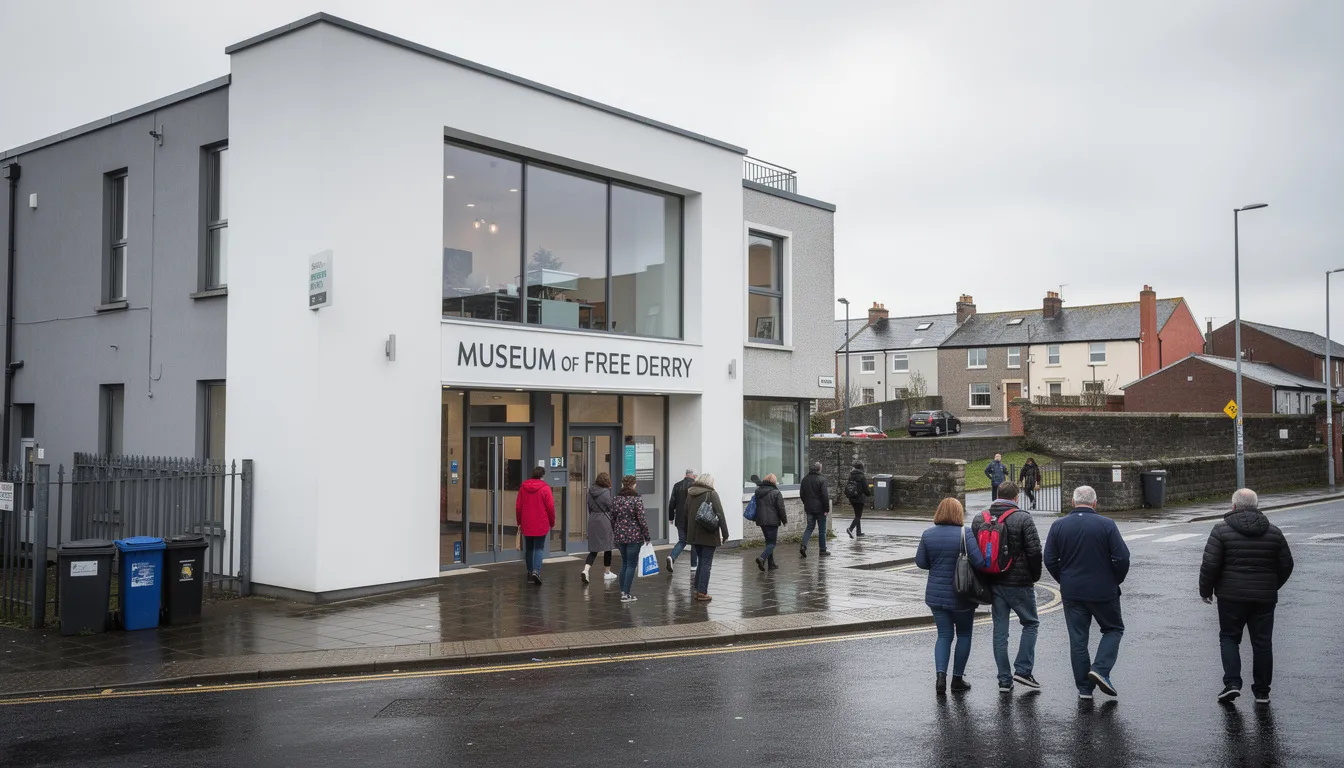
The nearby Museum of Free Derry serves as the primary interpretive center for understanding the wall’s history and significance. The museum houses extensive exhibitions about the Free Derry period, including photographs, artifacts, and personal testimonies from residents who lived through the autonomous zone era. Visitors can explore detailed displays about the wall’s creation, the three-year period of community self-governance, and the eventual military intervention that ended Free Derry.
Museum staff provide guided tours that include visits to the wall and other significant sites in the Bogside, such as the Bloody Sunday Memorial and various murals depicting the area’s turbulent history. These tours offer visitors deep insights into the complex political and social dynamics that shaped Northern Ireland during the Troubles, with the Free Derry Wall serving as a central focal point for understanding this period.
Preservation efforts for the wall involve regular maintenance and repainting to ensure the slogan remains clearly visible and the structure itself remains stable. Local authorities and heritage organizations recognize the wall’s importance as both a historical landmark and a continuing symbol of political expression, leading to protective measures that balance preservation with the community’s ongoing use of the site for political messaging.
The wall’s status as a heritage site has been formalized through various recognition programs, though its continuing role as an active site of political expression means that preservation must accommodate ongoing changes and updates. This balance between heritage protection and political vitality makes the Free Derry Wall unique among historical landmarks in Ireland.
Tourism numbers for the Free Derry Wall and surrounding Bogside area have grown significantly in recent decades, particularly following the Good Friday Agreement and the relative peace that has characterized Northern Ireland since 1998. The wall now features prominently in Derry’s cultural tourism offerings, with the city marketing its civil rights heritage as part of broader efforts to attract visitors interested in history, politics, and cultural identity.
Legacy and Contemporary Relevance
The Free Derry Wall’s enduring impact extends far beyond its original context, continuing to inspire civil rights movements globally and serving as a powerful reminder of the importance of community resistance and self-determination. Its influence can be seen in street art and political murals worldwide, with similar declarations of autonomous zones appearing in various contexts of struggle and resistance.
The wall’s legacy is particularly evident in ongoing discussions about freedom, resistance, and the right of communities to control their own destiny. From the early January days of 1969 to the present moment, the wall has represented the possibility of alternative forms of governance and community organization, inspiring activists and organizers around the world to imagine and create their own autonomous spaces.
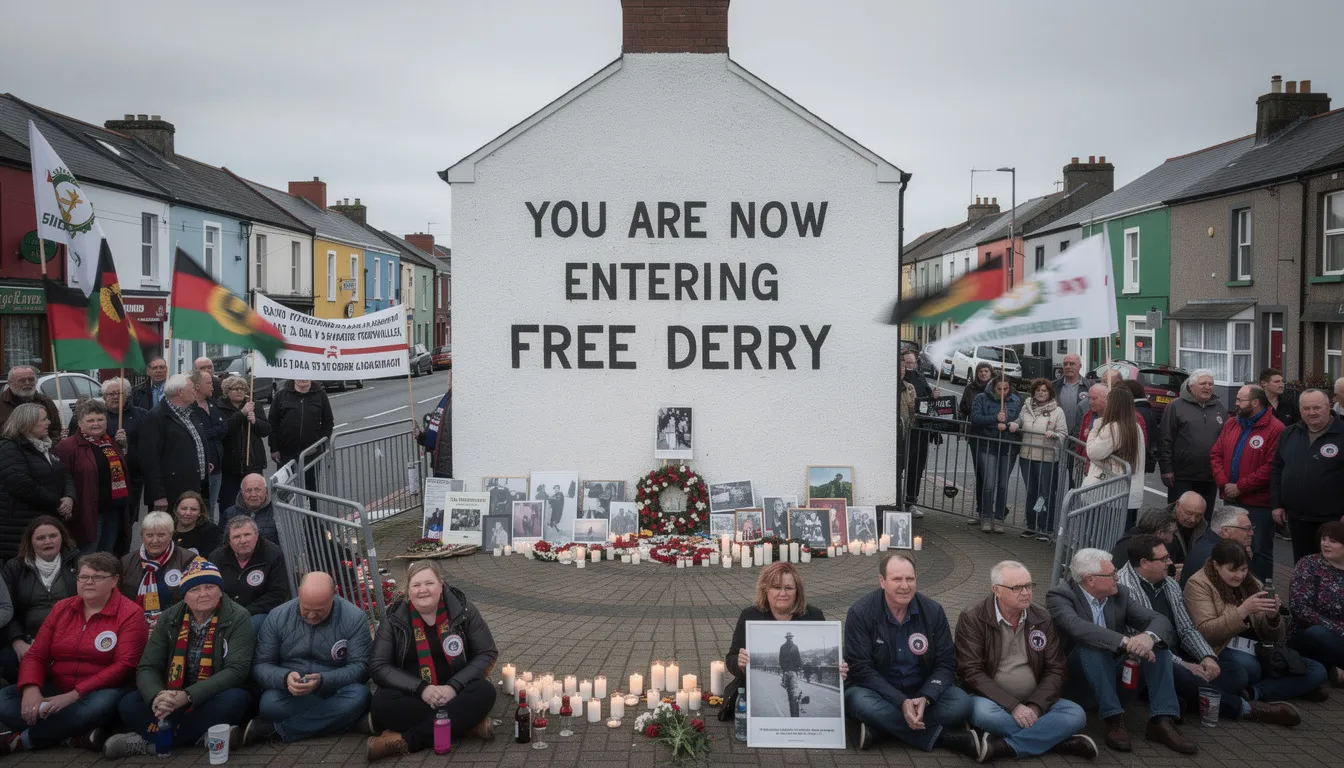
Contemporary relevance is maintained through regular commemorative events and anniversary celebrations that center around the wall. The annual Bloody Sunday commemoration brings thousands of people to Free Derry Corner, where political speeches and cultural events reinforce the wall’s significance within ongoing struggles for justice and equality. These gatherings demonstrate how the wall continues to serve as a focal point for political consciousness and community solidarity.
The wall’s influence on global movements for freedom and justice can be traced through various liberation struggles that have adopted similar symbolic approaches. From Belfast to Berkeley, from Palestine to other sites of resistance worldwide, the format and message of declaring autonomous space has been replicated and adapted by communities seeking to challenge state authority and assert their independence.
Educational programs at local schools and universities regularly use the Free Derry Wall as a case study in community organizing, civil rights history, and the power of symbolic resistance. These academic applications help ensure that the lessons learned from the Free Derry period continue to inform new generations of activists and scholars studying social movements and political change.
The wall’s contemporary relevance is also evident in its regular appearance in media coverage of Northern Ireland politics and in discussions of conflict resolution and peace-building. As a symbol that has survived decades of conflict and continued to evolve with changing circumstances, the Free Derry Wall offers important insights into how communities can maintain their identity and values while adapting to new political realities.
International visitors to the wall often report being inspired by its message and history, with many drawing connections to their own experiences of struggle and resistance. This global resonance demonstrates how local symbols of resistance can transcend their original context to become universal symbols of the human desire for freedom and self-determination.
The Free Derry Wall stands today not only as a memorial to a specific historical period but as a living symbol that continues to evolve and inspire. From its humble origins as painted words on a gable wall in early January 1969 to its current status as an internationally recognized symbol of resistance, the wall embodies the enduring power of community action and the ongoing relevance of struggles for civil rights and social justice. Whether you visit Free Derry Corner as a tourist exploring Northern Ireland’s complex history or as someone seeking inspiration for contemporary struggles, the wall serves as a powerful reminder that ordinary communities can achieve extraordinary things when they decide to take control of their own destiny.