Rising dramatically from the County Antrim countryside near Ballymena town, Slemish Mountain stands as one of northern ireland’s most significant religious and historical landmarks. This distinctive volcanic peak, which served as the legendary first known irish home of saint patrick during his years of captivity, continues to draw thousands of pilgrims and hikers annually to its rocky slopes. Whether you’re seeking spiritual connection, outdoor adventure, or simply spectacular views across the antrim hills, Slemish Mountain offers a unique glimpse into Ireland’s Christian heritage combined with some of the region’s most rewarding hiking.
Overview of Slemish Mountain
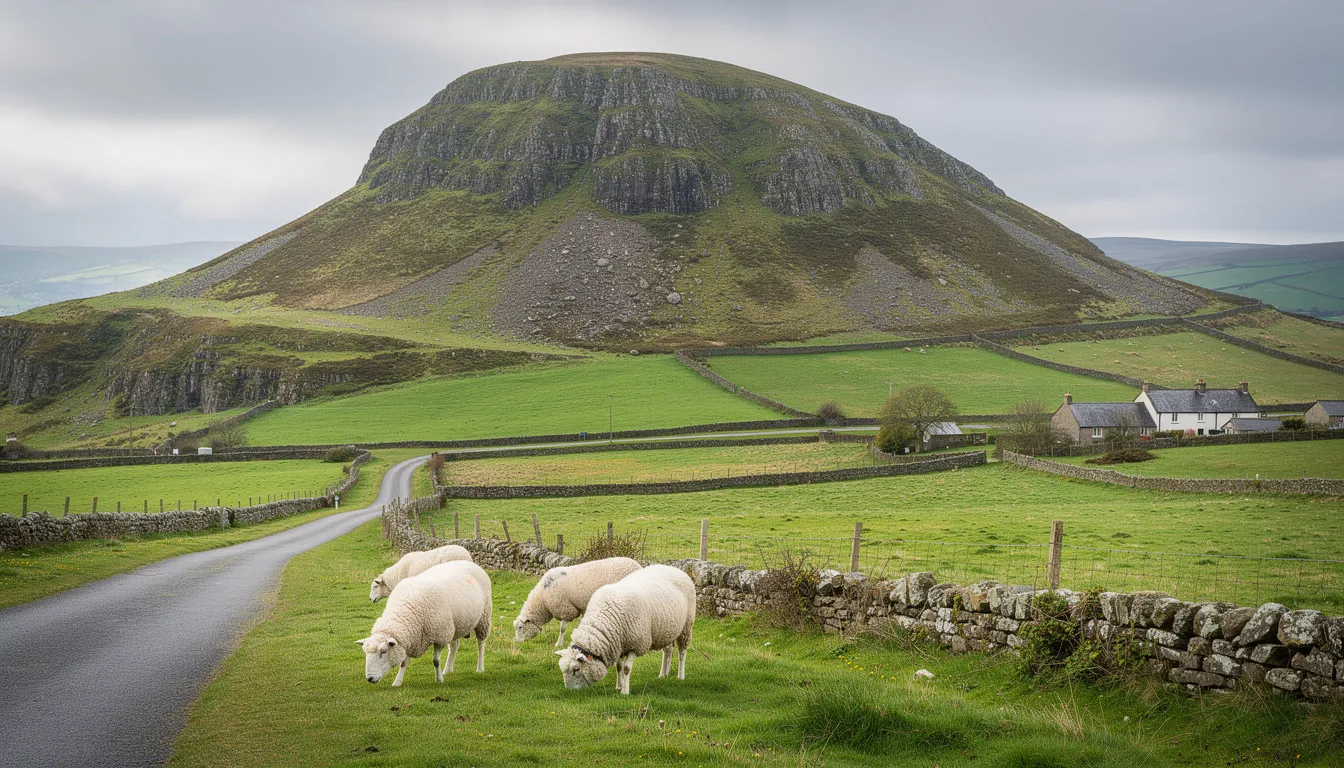
Slemish Mountain rises 437 metres (1,434 feet) above the surrounding plain in County Antrim, creating one of the most recognizable landmarks in northern ireland. The mountain is actually the central core of an extinct volcano, a basalt plug that has resisted millions of years of erosion while the softer surrounding rock weathered away. This geological foundation gives mount slemish its characteristic steep profile and distinctive appearance that can be seen from approximately thirty miles away on clear days.
Located just eight miles northeast of ballymena town center, the mountain sits in the townland of Carnstroan along the inland route through County Antrim. The name derives from the ancient Celtic “Sliabh Mis,” meaning “Mis’s mountain,” reflecting its deep roots in Irish culture long before its Christian associations developed.
As the designated legendary first known irish home of saint patrick, Slemish attracts visitors year-round who come to walk in the footsteps of Ireland’s patron saint. The mountain features established infrastructure including a dedicated slemish car park and basic facilities, making it accessible to visitors of all ages seeking to experience this sacred landscape.
The volcanic origins of the central core have created the mountain’s unique character. While the surrounding countryside consists of gentler rolling hills and farmland, Slemish’s dramatic rise from the metres above the surrounding plain creates an almost mystical presence that has captured imaginations for centuries.
Saint Patrick’s Connection to Slemish
According to legend following his capture by pirates at age 16, saint patrick worked as a shepherd on Slemish’s slopes for approximately six years during his captivity. The young Patrick served under a master named Milchu (also recorded as Miliucc) after being brought to ireland allegedly to work as a slave in the remote County Antrim countryside.
During this transformative period from ages 16 to 22, patrick turned to frequent prayer as consolation in his loneliness. The isolated mountain location, with its harsh weather conditions and demanding shepherding work, provided the setting for Patrick’s spiritual awakening. Historical accounts describe how patrick turned to frequent prayer and communion with nature during his time on slemish, praying continuously in all weathers communing with nature on the mountain’s exposed slopes.
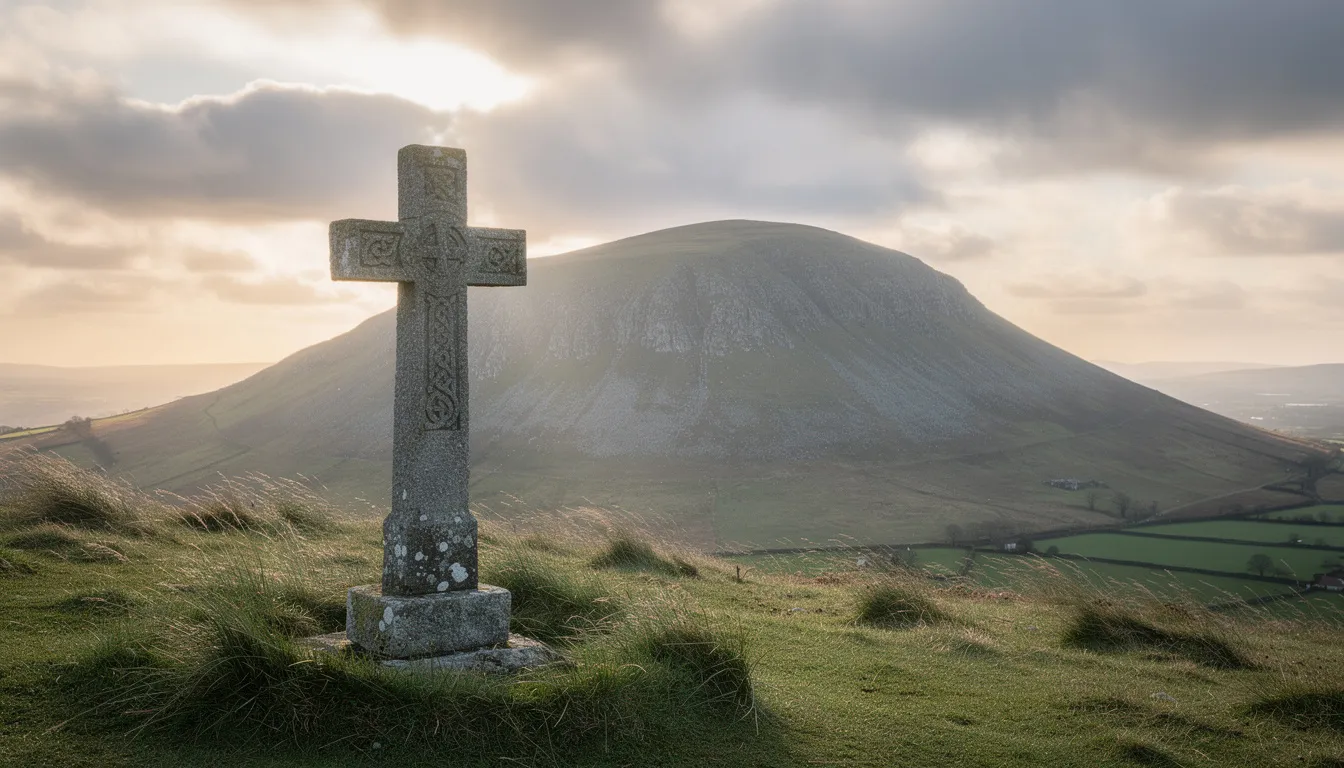
This period of captivity became the foundation for Patrick’s own real conversion to Christianity. The solitary years spent tending sheep while praying continuously through County Antrim’s challenging weather conditions shaped his spiritual development and prepared him for his later missionary work. Patrick’s time that patrick turned to constant prayer on mount slemish became central to Irish Christian tradition.
Following his escape and return home to Britain, Patrick eventually received ordination as a priest and returned to ireland allegedly to convert his old master Milchu and establish Christianity throughout the island. While Patrick was not the first christian bishop to visit ireland, his ministry became concentrated in the North, where he established churches and an episcopal system that would endure for centuries.
One such church was founded at the nearby site of skerry churchyard, representing some of Ireland’s earliest Christian infrastructure. The legend states that Patrick’s spiritual transformation took place while on slemish, making the mountain a cornerstone of Irish Christian heritage and the starting point for the conversion of Ireland to Christianity.
Hiking Slemish Mountain
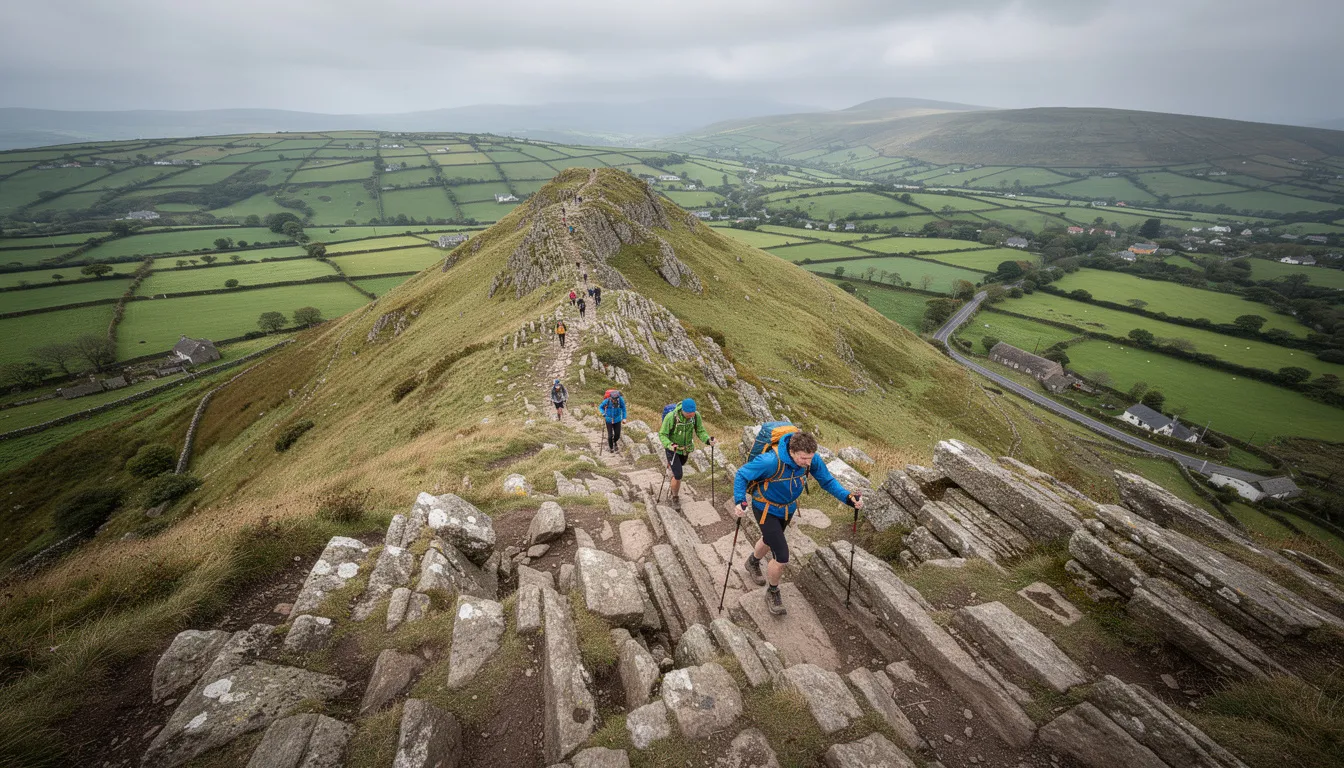
The journey to Slemish’s grassy summit covers approximately 1.2 miles from the car park, with a vertical climb of 180 metres that typically requires 1 to 1.5 hours for the complete round trip. Unlike many established hiking destinations, Slemish offers no clearly marked path—visitors must choose their own path up the mountain’s rocky terrain, adding an element of adventure to the spiritual pilgrimage.
The ascent begins gently through grassy track sections near the base, but becomes increasingly challenging as hikers approach the upper slopes. The mountain’s volcanic origins create rocky terrain requiring moderate fitness levels and sure footing. Some scrambling over rocky sections becomes necessary near the top, where the steepest portions demand careful navigation.
Trail Conditions and Safety
Weather and ground conditions significantly impact the hiking experience on mount slemish. The paths become extremely slippery in wet weather, transforming the already challenging rocky ramble into a potentially dangerous undertaking. Walking shoes with excellent grip are essential for safe ascent and descent, particularly given the mountain’s exposed basalt surfaces.
The descent often proves more challenging than the climb itself when the mountain is wet. Without established trail markers, hikers must carefully choose their route down the south western side or find their own path among the rocky sections. Weather checking is strongly recommended before attempting the climb, as County Antrim’s frequent precipitation can create hazardous conditions with little warning.
During good weather conditions, the hike offers moderate challenge suitable for most fitness levels. The route begins at the slemish car park and allows flexibility in choosing approach routes, though the south western approach is generally preferred for its gentler gradient in the lower sections.
Summit Views and Rewards
The 437-metre summit of Slemish Mountain provides spectacular panoramic views that reward hikers for their effort. To the east, excellent vistas extend across County Antrim’s rolling countryside to the Antrim Coast and even the scottish coasts on exceptionally clear days. These eastern views showcase the dramatic transition from Ireland’s inland agricultural landscape to the rugged coastal regions that define northern ireland’s eastern edge.
Western views from the grassy summit encompass the sperrin mountains of County Tyrone, creating a stunning backdrop that demonstrates the geographical diversity of the region. ballymena town lough neagh, Ireland’s largest freshwater lake, often appears clearly from the summit, along with the broader network of waterways that characterize County Antrim’s inland areas.
To the north, the bann valley stretches into the distance, while the surrounding antrim hills create a dramatic landscape backdrop that puts Slemish’s prominence into perspective. On the clearest days, visitors report seeing as far as the mountains of Scotland approximately thirty miles away, though such exceptional visibility depends on favorable weather conditions.
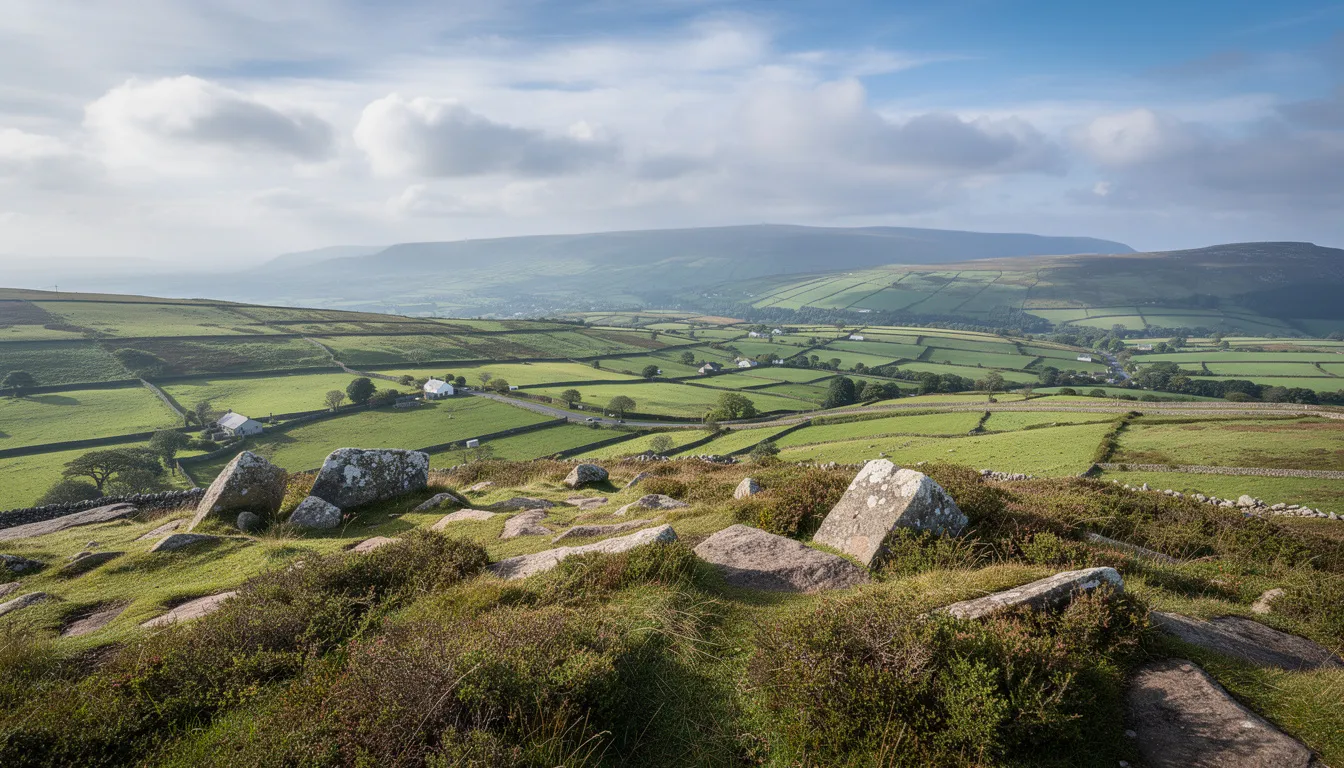
The summit also offers glimpses into agricultural history. The circular fields visible from above date from saint patrick’s time or earlier, representing landscapes where trees were cleared by hand using ancient farming techniques. Some of these fields may have belonged to Milchu, Patrick’s former master, creating a tangible connection to the historical narrative that makes Slemish sacred to Irish Christianity.
Saint Patrick’s Day Pilgrimage
Every March 17th, large crowds hike to Slemish’s summit for the annual st patrick’s day pilgrimage that has become one of northern ireland’s most significant religious observances. This traditional pilgrimage draws thousands of visitors from across Ireland and beyond, creating a powerful communal experience that connects modern pilgrims with centuries of Irish Christian tradition.
The annual gathering transforms the normally quiet mountain into a bustling center of religious activity. Churches throughout the region hold special services during the pilgrimage period, while the mountain itself becomes the focal point for prayers, hymns, and religious observances that honor saint patrick’s legacy. Large crowds gather throughout the day, creating an atmosphere of shared devotion and cultural celebration.
The saint patrick’s day pilgrimage connects directly to Patrick’s transformative years as a shepherd on these slopes. Participants follow the same paths where the young saint experienced his spiritual awakening, creating a powerful link between past and present. The proximity of skerry churchyard, connected to Patrick’s church-building activities after his ordination, adds additional religious significance to the pilgrimage experience.
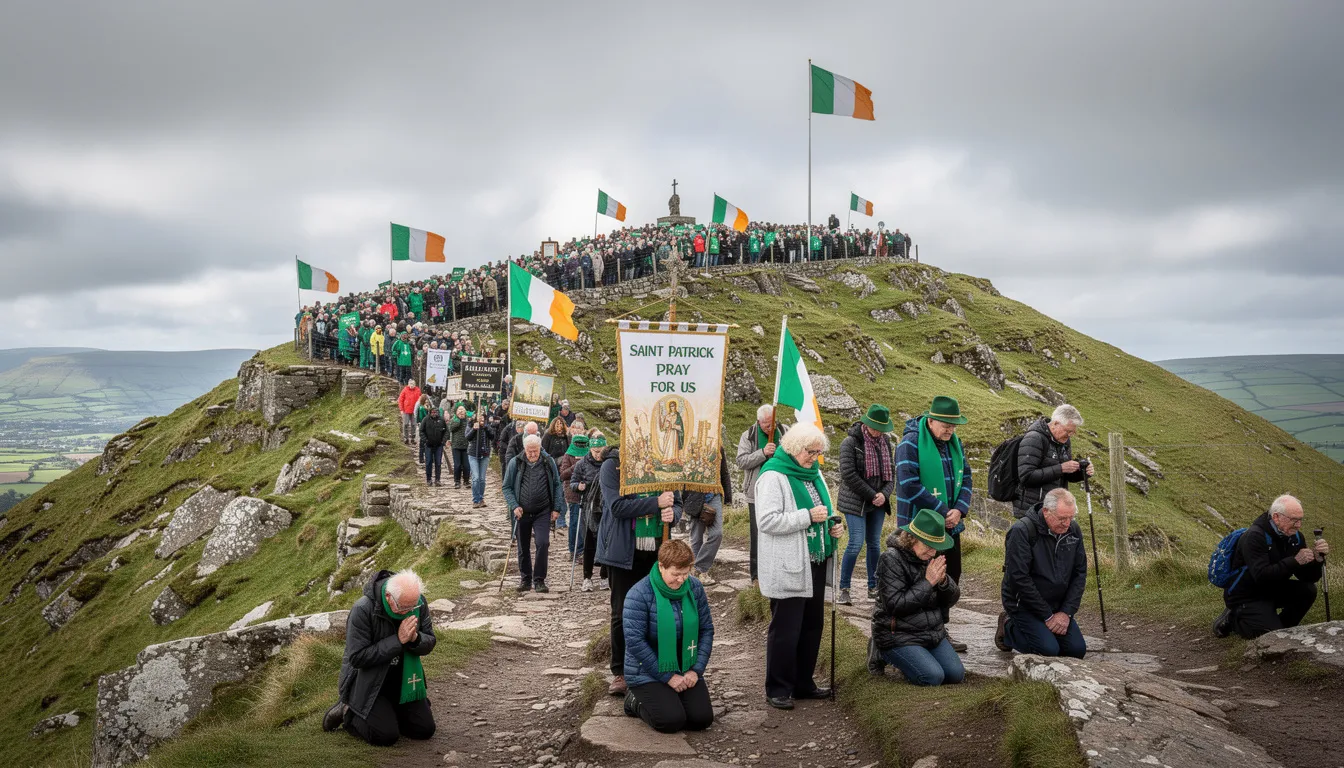
This annual tradition demonstrates the enduring power of saint patrick’s connection to Slemish Mountain. The pilgrimage has grown significantly in recent decades, reflecting both Ireland’s renewed interest in its religious heritage and the mountain’s accessibility to modern visitors seeking spiritual connection with their country’s patron saint.
Practical Visitor Information
The slemish car park provides the ideal starting point for any visit to the mountain, offering convenient access with basic toilet facilities and information boards detailing the mountain’s geology, history, and wildlife. Visitors should search “Slemish Car Park” on Google Maps for precise directions from ballymena town or other County Antrim locations.
The mountain remains accessible year-round via local roads including Buckna, Carnstroan Lane, and Collin Road. Free parking is available throughout the year, making Slemish an affordable destination for families, solo hikers, and group visitors alike. The car park’s location provides easy access to the mountain while preserving the natural character of the surrounding landscape.
Information boards at the base offer valuable context about the mountain’s role as the central core of an extinct volcano, its connection to saint patrick’s captivity and conversion, and the diverse wildlife that inhabits the surrounding countryside. These educational resources help visitors appreciate both the natural and cultural significance of their destination before beginning the climb.
Nearby Attractions
Slemish Mountain serves as an excellent base for exploring the broader County Antrim region. Multiple antrim coast attractions lie within easy driving distance, including coastal towns like Ballycastle and the famous causeway coastal route that connects visitors to some of northern ireland’s most spectacular coastal scenery. The proximity to both inland attractions and coastal destinations makes Slemish ideal for multi-day northern ireland itineraries.
ballymena town center offers dining and accommodation options for visitors planning extended stays in the region. The town’s restaurants and hotels provide comfortable bases for exploring not only Slemish but also the wider network of historical and natural attractions throughout County Antrim.
The antrim hills provide additional hiking opportunities for those seeking to extend their outdoor activities beyond Slemish Mountain. Historical sites throughout the region, from ancient ring forts to early Christian churches, complement the saint patrick experience and offer deeper insights into Ireland’s rich cultural heritage.
County Antrim’s position along major northern ireland touring routes makes Slemish an accessible addition to broader travel plans. Whether visitors are following the causeway coastal route, exploring Belfast and surrounding areas, or undertaking comprehensive northern ireland tours, the mountain’s central location and historical significance make it a worthwhile destination.
For those planning to visit ireland and explore the legendary irish home of saint patrick, Slemish Mountain offers an authentic connection to one of Christianity’s most influential figures. The combination of spiritual significance, natural beauty, hiking challenge, and cultural heritage creates a uniquely Irish experience that resonates with visitors of all backgrounds and interests.
The mountain’s accessibility year-round, combined with its proximity to other County Antrim attractions and the broader northern ireland tourism infrastructure, makes it an ideal destination for anyone seeking to understand Ireland’s Christian heritage while enjoying some of the country’s most dramatic landscape. Whether visiting during the busy saint patrick’s day pilgrimage or during quieter periods throughout the year, Slemish Mountain provides an unforgettable encounter with Irish history, spirituality, and natural beauty.