The vibrant streets of Belfast, Northern Ireland, narrate a powerful story through their thought-provoking Belfast murals. These captivating artworks reflect the city’s tumultuous history and provide a glimpse into its cultural soul. As you embark on a visual journey through Belfast’s murals, you will be immersed in a world of political messages, revolutionary icons, and solidarity expressions that span centuries and continents.
Key Takeaways
- Explore Belfast’s murals, a vivid testimony to the city’s history and context of conflict.
- Honour legacies of struggle & courage with memorials to Irish hunger strikers and modern martyrs.
- Appreciate art that transcends geographical boundaries, advocating unity & progress for peace & reconciliation.
Exploring the Canvas of Conflict: Belfast’s Political Murals
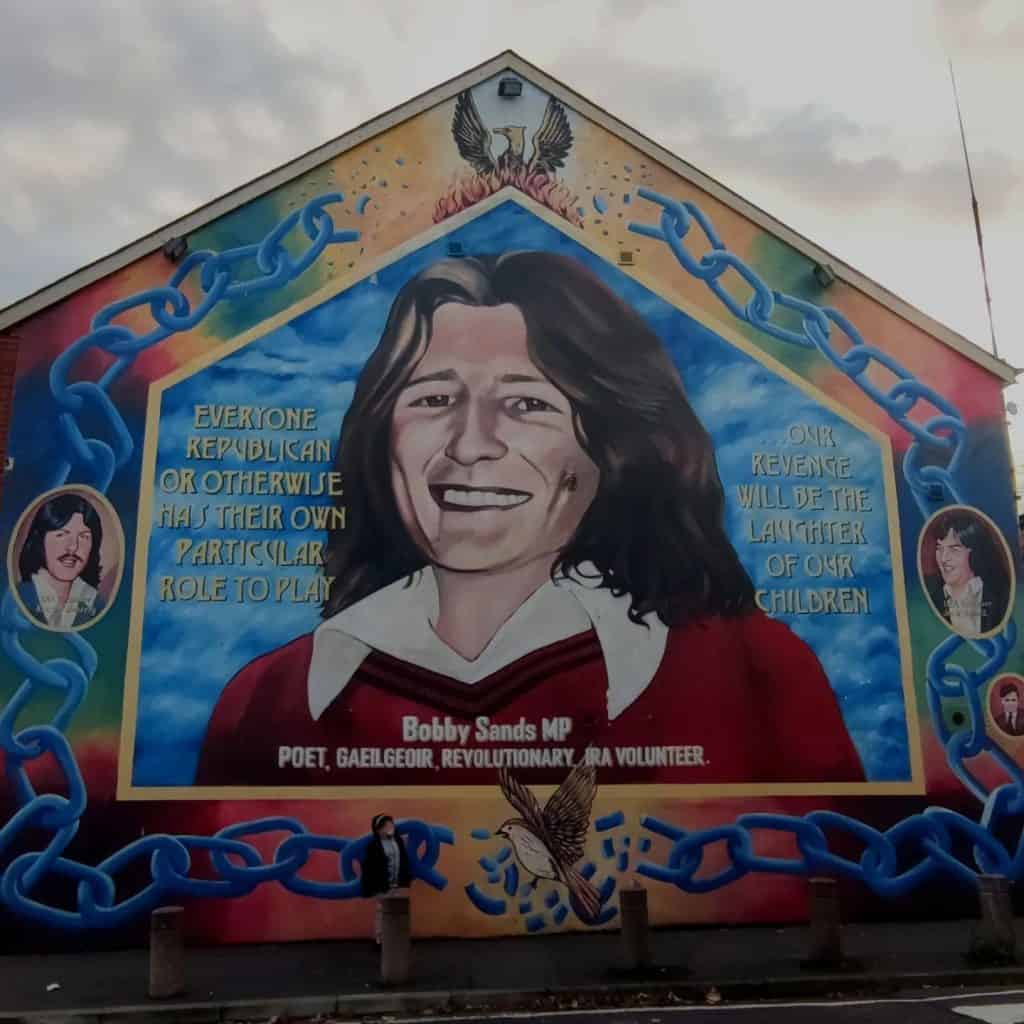
Bobby Sands Mural, Belfast
Working-class areas of Northern Ireland, predominantly in Belfast and Derry, are adorned with political murals that significantly influence their urban landscapes. These artworks serve as a powerful medium to convey ideas and messages, often reflecting the community’s values, including cultural identity, pride, faith, and historical perspectives. With an estimated 300 high-quality murals on display in Belfast, these artistic expressions have gained international recognition for their ability to illustrate the city’s history and the importance of these artworks in Northern Ireland’s conflict.
The conflict centred around the partition of Northern Ireland and its British control, which was marked by uprisings against British rule, such as the Easter Rising, highlighting the historical struggle for independence. This sparked tensions between nationalist and unionist citizens that at times resembled a civil war. During this period, paramilitary groups emerged, such as the Republicans who wanted Northern Ireland to be united with the Republic of Ireland and the loyalists who desired it to remain part of the United Kingdom. The late 1970s saw the emergence of Irish Republican mural paintings, among which the Nelson Mandela mural stands out in Belfast, drawing parallels between the Nationalist cause and South Africa’s anti-apartheid struggle. The IRA began its campaign during this period, which significantly influenced the themes and proliferation of republican murals depicting resistance and revolutionary symbolism.
These murals not only commemorate important events, figures, or ideas in Northern Ireland’s history but also provoke contemplation regarding the political and religious divisions that have shaped the region. Some murals are directly political, explicitly communicating political messages and commemorating significant events or ideological allegiances. Following the 1998 Good Friday Agreement that marked the end of the conflict in Northern Ireland, these murals have assumed an increasingly significant role in fostering dialogue and mutual understanding among communities. Many paramilitaries are depicted or referenced in the murals, symbolizing their political identities and histories.
The Heartbeat of History: Murals on Falls Road
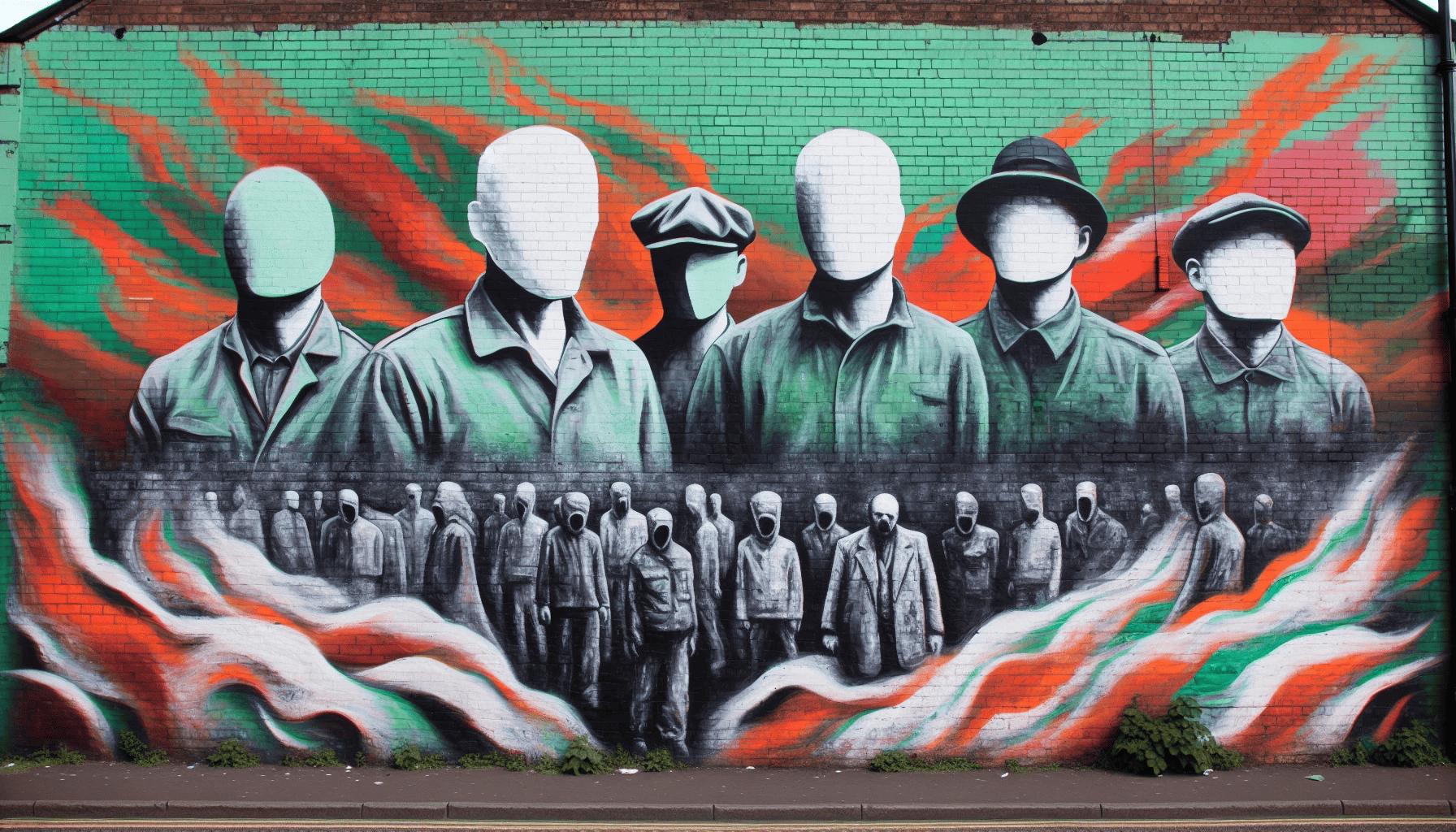
Along the Falls Road, a predominantly Nationalist area in Belfast, murals serve as a vivid testament to the struggles and aspirations of the local community. These murals often depict key moments in Irish history, including revolutionary events and figures. The murals explore themes such as global solidarity, with some depicting support for Palestinian liberation and Basque freedom, and also highlight international solidarity and the influence of revolutionary groups. Each mural echoes history’s heartbeat, providing a visual narrative and an emotional connection to the region’s past.
Prominent themes in the Falls Road murals include hunger strikers’ enduring legacy and revolutionary figures’ portrayals. These powerful images serve as a constant reminder of the sacrifices made by individuals who have fought for freedom and justice in Northern Ireland. These murals often convey a strong republican message, reflecting the ideals of the movement.
The Legacy of Hunger Strikers
Among the murals on Falls Road, the renowned Bobby Sands mural stands out as a potent symbol of the Republican movement. Bobby Sands, an IRA volunteer, died in prison on hunger strike in 1981, and his mural, located on the side wall of Sinn Féin’s Falls Road office, is widely recognized. The depiction of Bobby Sands and other murals dedicated to the Irish hunger strikers serves as a stark reminder of the struggle for freedom and justice in Northern Ireland.
These murals commemorate the sacrifices made by those who fought for a brighter future, giving voice to their courage and determination. As visitors stand before the images of these hunger strikers, they are transported back in time, bearing witness to the pain and suffering endured by these brave individuals and gaining a deeper understanding of the complexities of Northern Ireland’s history.
Portraits of Revolution: Depictions of Historical Figures
Beyond murals of hunger strikers, Falls Road hosts an array of art pieces depicting historical figures like James Connolly and Nelson Mandela. These murals are a meaningful way to remember and recognize their efforts to pursue freedom and justice. The Nelson Mandela mural, in particular, features Mandela with his fist raised, symbolizing resistance and hope. This iconic gesture illustrates the similarities between the Nationalist cause in Northern Ireland and Mandela’s anti-apartheid movement in South Africa, embodying peace and stability in the wake of conflict.
James Connolly, a Socialist, trade union leader and Irish Republican, is remembered through a remarkable mural. He was one of the leaders of the 1916 Easter Rising. This solemn tribute commemorates his contributions to the Irish Nationalist movement, inspiring future generations. As visitors take in these striking images of revolutionary figures, they gain a deeper appreciation of the historical context in which these individuals fought for their ideals.
Shankill Road: Loyalist Mural Masterpieces
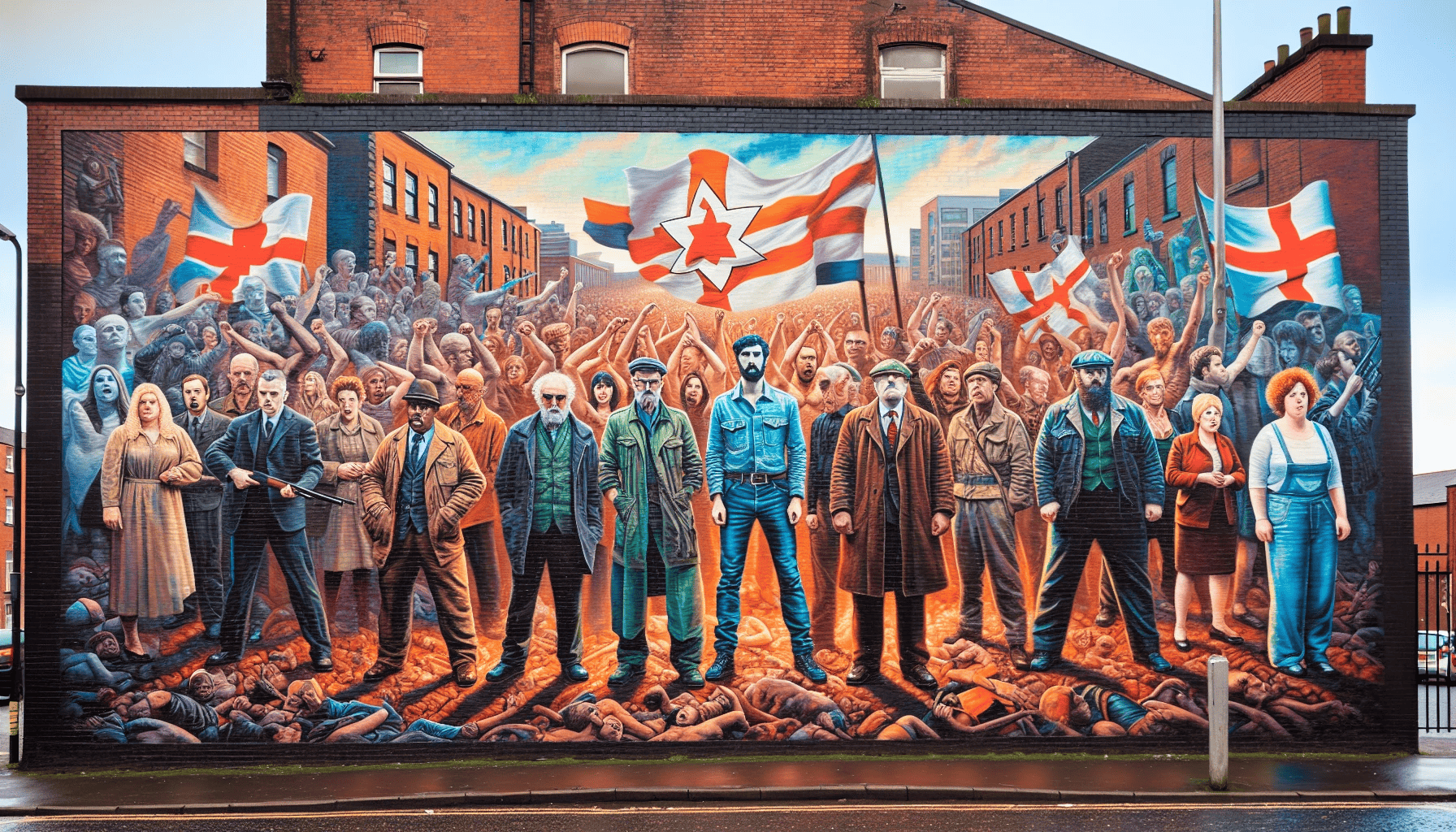
Shankill Road, a largely unionist area of Belfast, features a notable collection of Loyalist murals visually expressing the pride and commemorations of the Loyalist communities. These murals depict Loyalist heroes, symbols of Unionism, and memorials to victims of The Troubles, representing themes of triumph and martyrdom. Many of these murals express the identity and values of a particular community, serving as visual symbols of their beliefs and historical experiences. Traditional themes such as William of Orange and the Battle of the Boyne are equally common in loyalist murals, evoking historical identity and regional pride.
Two prominent themes emerge within these Loyalist mural masterpieces: King William’s triumph, often featuring King William on a white horse as a symbol of Protestant loyalty, and the commemoration of modern martyrs. Both themes offer a glimpse into the Loyalist experience and the ongoing challenges faced by the Protestant communities in Northern Ireland.
King William’s Triumph
One of the most iconic Loyalist murals is the tribute to King William III, also known as William of Orange or ‘King Billy’ in Scotland and Northern Ireland. This Protestant ruler engaged in wars against Catholic rulers in the 17th century, most notably the Battle of the Boyne in 1690, commemorated annually by Unionist communities and holds significance for the British Army.
The King William mural vividly demonstrates the Protestant community’s historical roots and continual quest for identity and recognition in Northern Ireland.
Memorials to Modern Martyrs
Shankill Road presents murals honouring modern Loyalist martyrs like Stevie McKeag and Jackie Coulter, along with the King William mural. These solemn tributes portray the human cost of the ongoing conflict, shedding light on the experiences of those who have suffered as a result of the violence and divisions in Northern Ireland.
Jackie Coulter, a Loyalist and member of the Ulster Defence Association (UDA), was tragically killed by the Ulster Volunteer Force (UVF) in 2000. The mural dedicated to him serves as a poignant reminder of the sacrifices made by those who fought for their beliefs and the continuing struggle for peace and unity in Northern Ireland.
Beyond Division: Non-Sectarian and Peace Murals
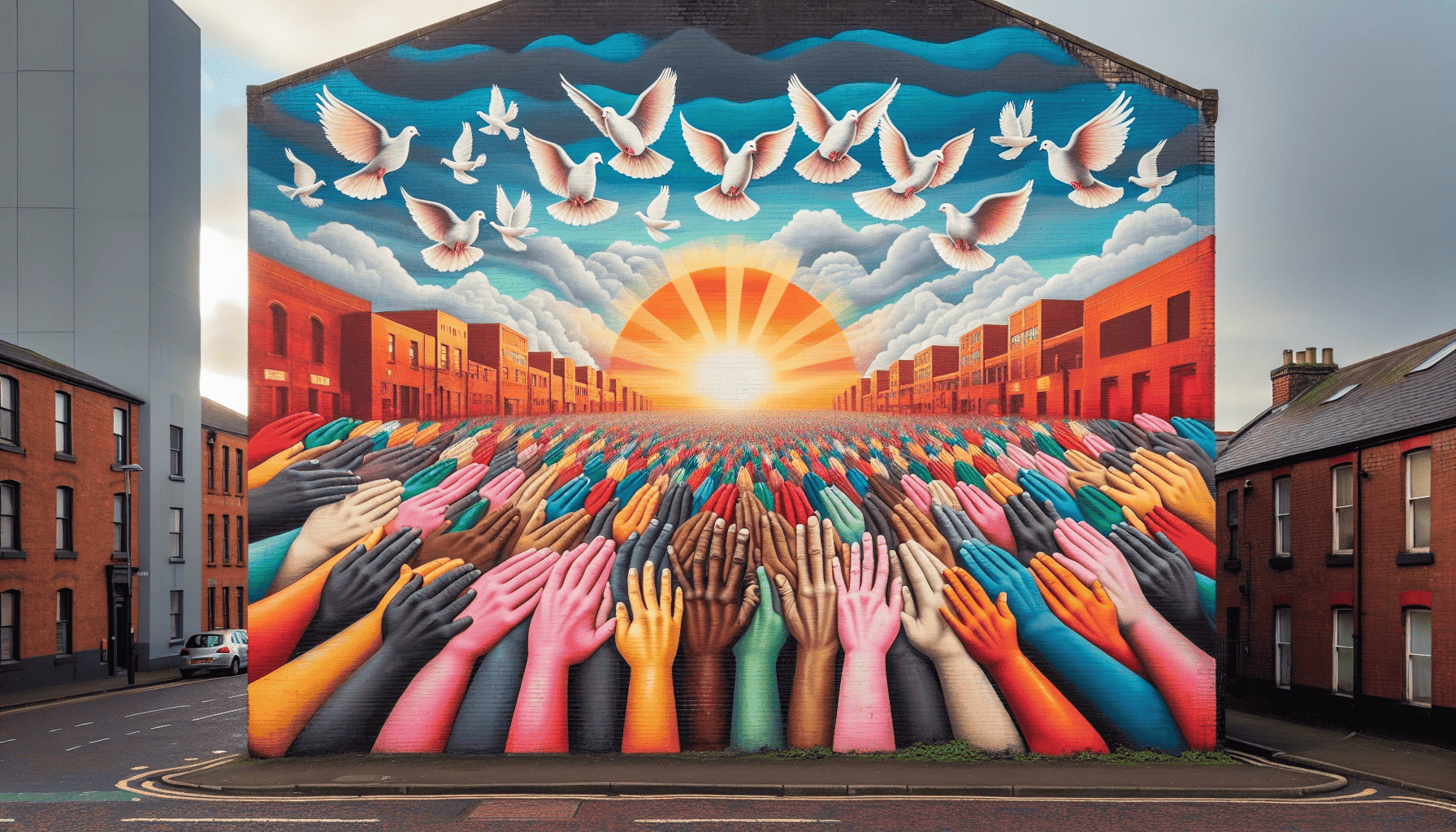
Intermingled with Belfast’s political murals are non-sectarian and peace murals advocating unity and progress. These murals aim to bridge the divide between communities, offering a vision of hope and healing in the face of adversity. Peace and non-sectarian murals have become increasingly popular as communities and schools engage in mural painting to promote harmony. Not all murals are political; many depict cultural, historical, or neutral themes, reflecting the diversity of mural art in Belfast. As visitors explore these murals, they are reminded of the potential for reconciliation and art’s power to unite people.
One such mural is the Progress Mural, representing various Northern Ireland communities, all facing the Parliament Buildings at Stormont. This symbolizes a journey towards peace and a brighter future for all. Some murals avoid political or sectarian themes, instead focusing on neutral subjects, community issues, or cultural references to promote peace and tolerance. As Belfast continues to evolve, these non-sectarian and peace murals will undoubtedly play a crucial role in fostering understanding and dialogue between communities.
Artistic Expressions of Solidarity
Murals in Belfast also convey solidarity with international causes, including the Palestinian struggle and the anti-apartheid movement. These murals serve as a testament to the interconnectedness of global struggles and the power of art to transcend borders and promote unity. Visitors take in these artistic expressions of solidarity and are reminded of the shared aspirations for freedom and justice that unite people worldwide.
The Nelson Mandela mural, for instance, connects the Nationalist cause in Northern Ireland with South Africa’s anti-apartheid struggle. This mural is a powerful reminder that pursuing freedom, equality, and justice is a universal aspiration, transcending geographical and cultural boundaries. Belfast joins the voices calling for a more just and equitable world through these murals.
Cultural Celebrations in Color: Non-Political Murals
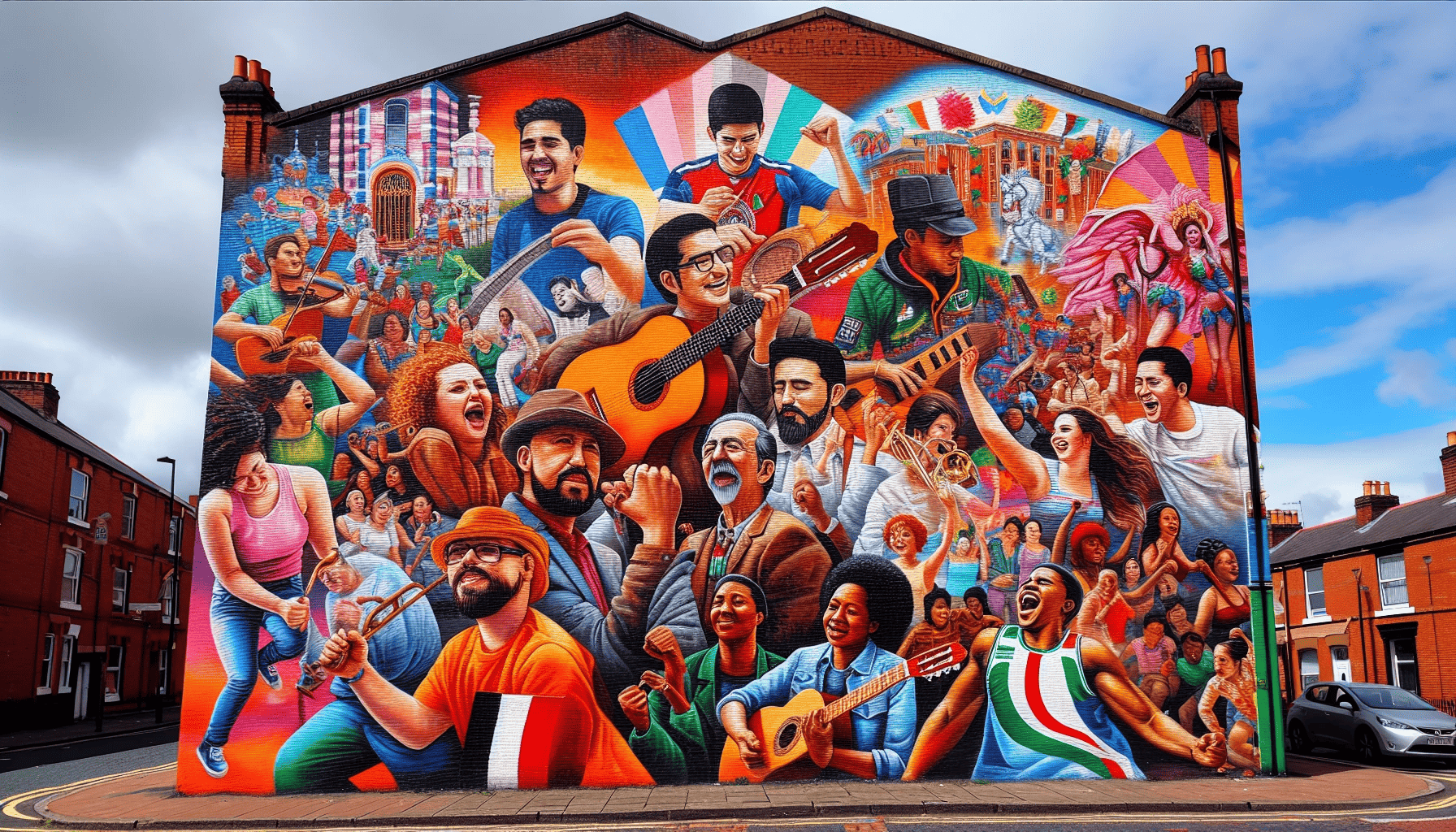
Apart from political and solidarity murals, Belfast features a range of non-political murals celebrating culture, sports, and local heroes such as George Best. These murals showcase the rich tapestry of Belfast’s cultural landscape and offer a colourful and uplifting counterpoint to the more sombre and politically charged murals found throughout the city.
Some murals commemorate other moments in Irish history, such as the Great Famine or literary achievements, reflecting a broader social memory beyond political themes. In addition, certain murals incorporate references to local media, such as a Derry publication, highlighting the connection between mural art and regional identity.
For instance, the Belfast Linen Workers mural pays tribute to the city’s industrial past, while the Tribute to RMS Titanic mural commemorates the ill-fated ship built in Belfast. These non-political murals serve as a reminder of the city’s diverse history and the many stories that have shaped its unique identity.
Guided Tours: Immersing in the Mural Experience
Guided tours are offered for those seeking a comprehensive experience of Belfast’s murals. These tours provide an in-depth look into the history and significance of the renowned murals of Northern Ireland, engaging visitors with the stories and emotions conveyed through art.
Belfast Mural Guide Estimated Routes
The Belfast Mural Guide Estimated Routes provides suggested routes for viewing Belfast’s murals, simplifying the process for visitors to navigate the city and find these significant art pieces. With principal landmarks such as:
- James Connolly Mural
- Pearse Jordan’s Mural
- Bobby Sands Mural
- King Billy Mural
- Gaelic Athletic Association
- Failte Feirste
Notable murals can also be found on Newtownards Road, Oceanic Avenue, and Thorndyke Street, each location holding its own historical and cultural significance.
Visitors can follow the guide and take in Belfast’s murals’ breathtaking history and artistry.
Recreate Murals with Local Artists
Opportunities are available for those interested in engaging with local artists and recreating murals during their tour. Collaborating with local artists such as:
- Mark Ervine
- Danny Devenny
- Terry Bradley
- Friz
- Ray Bonner
In 2007, three artists, like the renowned Bogside artists, were invited to recreate murals for international exhibitions, demonstrating the collaborative nature of mural art and its role in cultural and political expression.
Visitors can participate in mural recreation and contribute to Belfast’s vibrant artistic landscape.
By immersing themselves in the mural’s depiction of the creation process, visitors can gain a deeper understanding of the city’s history, culture, and the power of art to communicate and inspire as the mural depicts significant moments and figures.
Navigating the Streets: A Map of Belfast’s Murals
The source section provides a map of Belfast’s murals, which assists visitors in navigating the city and locating the murals. This map, along with the Belfast Mural Guide Estimated Routes, allows visitors to explore the city’s murals in a self-guided and immersive manner.
As they navigate the streets of Belfast, visitors will encounter murals in varying degrees of preservation, from newly painted to weathered and faded. They will be struck by the powerful visual narratives that adorn the city, each telling a unique story of struggle, hope, and resilience. This is especially true when exploring the vibrant murals in east Belfast and those in west Belfast.
The Evolution of Belfast’s Murals
Belfast’s murals have evolved to mirror societal and political changes, visually chronicling the city’s transformation. Over the last century, murals have been painted by artists, community groups, and local residents to reflect changing social and political realities. From the earliest murals commemorating traditional aspects of Protestant culture to those illustrating the ongoing struggle between Nationalists and Unionists, these artworks have adapted to mirror the shifting landscape of Northern Ireland. Traditional themes such as William of Orange and the Battle of the Boyne are equally common alongside newer motifs, highlighting the widespread presence of these subjects in Belfast’s mural art.
In recent years, the Peace Process has significantly impacted the murals, resulting in a shift in their themes and messages. Many murals now focus on promoting peace, reconciliation, and unity, reflecting the desire for a peaceful future in Northern Ireland. However, present political divisions are still visually represented in many murals, serving as symbols of ongoing identities and allegiances. These murals, along with the non-sectarian and peace murals, serve as a testament to the power of art to heal divisions and foster understanding between communities.
Preservation and Conservation: Safeguarding Belfast’s Mural Heritage
Belfast’s murals are more than just striking works of art—they are living testaments to the city’s complex history, reflecting the deep political and religious divisions that have shaped Northern Ireland. As these murals continue to capture the stories and struggles of both Catholic and Protestant communities, preserving them has become a vital part of safeguarding Belfast’s unique cultural identity.
Conservation efforts are underway across the city to protect these iconic murals from the effects of time, weather, and vandalism. Initiatives include regular maintenance, protective coatings, and community education programs that highlight the significance of these artworks. The Belfast Mural Guide, which estimated around 300 high-quality murals throughout the city, underscores the importance of these visual narratives in understanding the region’s past and present.
Key sites such as the International Wall, with its powerful Irish Republican and international themes, and Free Derry Corner, famous for its bold “You Are Now Entering Free Derry” slogan, are at the forefront of preservation projects. These landmarks, along with Loyalist murals in East Belfast and memorials like the Ulster Freedom Corner and Red Hand Commando Memorial, are carefully maintained to ensure that the voices and perspectives of all communities remain visible. Equally, Republican murals such as the Bobby Sands mural on Falls Road, the Clowney Phoenix, and the Easter Rising Tribute are preserved to honor the history and resilience of those who have shaped Northern Ireland’s journey.
Community involvement is central to these conservation efforts. School groups are increasingly engaged in designing and painting new murals, often focusing on neutral subjects like litter prevention and environmental awareness. These projects not only help beautify the city but also promote peace, tolerance, and a sense of shared responsibility among young people. By encouraging the next generation to participate, Belfast is fostering a culture of respect and unity that transcends political and religious boundaries.
In addition to physical preservation, digital archiving initiatives are making Belfast’s mural heritage accessible to a global audience. High-resolution photographs and detailed descriptions are being catalogued online, allowing people from around the world to explore the city’s murals and learn about their historical context. This digital approach ensures that even as the city evolves, the stories told on its walls will not be lost.
As Belfast continues to move forward, balancing the preservation of its mural heritage with the ongoing need for political change and social movement is essential. The murals remain powerful symbols of the city’s past struggles and its hopes for a more peaceful and inclusive future. Resources like the Locate Series and the Belfast Mural Guide provide invaluable tools for residents and visitors alike to navigate and appreciate the rich tapestry of Belfast’s murals, ensuring that this vibrant tradition endures for generations to come.
Reflecting on the Past, Present, and Future
Reflecting on Belfast’s past, present, and future murals reveals the pivotal role these artworks play in shaping the city’s cultural landscape. For the last century, murals have been a feature of Belfast’s landscape, chronicling the city’s evolving identity. They provide a vivid chronicle of Belfast’s history and ongoing struggles and serve as identity markers that delineate psychological boundaries between communities. In this way, the murals contribute to a visible conversation among communities and recognize the interconnectedness of global struggles.
The murals will continue to evolve, mirroring the city’s progress towards peace and unity. As the city enters a new era of hope and reconciliation, the murals will remain integral to Belfast’s cultural fabric, offering a distinctive insight into the city’s past, present, and future.
Summary
In conclusion, Belfast’s murals are a testament to the city’s rich history and the power of art to communicate, inspire, and heal. As visitors explore these captivating artworks, they are immersed in a world of political messages, revolutionary icons, and solidarity expressions that span centuries and continents. Collectively, the murals reflect the diverse history, culture, and political landscape of Ireland altogether. As the city continues to evolve and strive for peace, the murals will remain essential to Belfast’s cultural landscape, providing a colourful and thought-provoking window into the city’s past, present, and future.
Frequently Asked Questions
What is the most famous mural in Belfast?
The most famous mural in Belfast is the Bobby Sands mural located on Falls Road in west Belfast. It depicts Bobby Sands, a prominent figure during the Troubles and the first prisoner to die on a hunger strike for the Irish Republican cause. Close behind in fame is the collection of Irish Republican and international-themed murals known as ‘The International Wall’.
Where can I see Belfast murals?
You can easily walk to the main Peace Wall in Belfast from the city centre, where you can loop around and see the murals on each side. This provides an excellent opportunity to experience the different communities separated by the wall and get a sense of the local culture.
Why are the murals in Belfast important?
The murals in Belfast are important symbols that commemorate the Troubles, memorialize victims of violence and celebrate Irish culture and values. They serve as a physical reminder of the past political and religious divisions in Northern Ireland and reflect its changing landscape.
What is the summer of 69 mural in Belfast?
The Summer of 69 mural in Belfast is a Loyalist mural depicting the devastation caused by the Troubles conflict, which began in 1969. It serves as a reminder of the ethno-nationalist conflict that lasted approximately 30 years.
Can you walk the murals in Belfast?
Yes, you can walk the murals in Belfast, although a local guide to explain the history and stories behind each one is highly recommended. Several tours are available, including a popular 3-hour walking tour or a private one.