
Welcome to the intricate world of Northern Ireland’s currency! A labyrinth where local banks issue their unique banknotes, adding nuanced layers to the traditional British Pound Sterling, which means that british pounds are the official currency used throughout Northern Ireland. This comprehensive guide is your Sherpa, leading you through the fascinating terrain of northern ireland currency system, exchange rates, and safe financial practices.
Key Takeaways
- Northern Ireland uses the British Pound Sterling as its official currency, with local banks issuing their own unique banknotes.
- Polymer notes have recently been introduced to improve security and durability, featuring state-of-the art features such as holograms and microlettering.
- It is important to plan finances before travelling by bringing proper currency (Pound Sterling), monitoring exchange rates & confirming foreign transaction fees with credit card provider.
Currency Overview in Northern Ireland
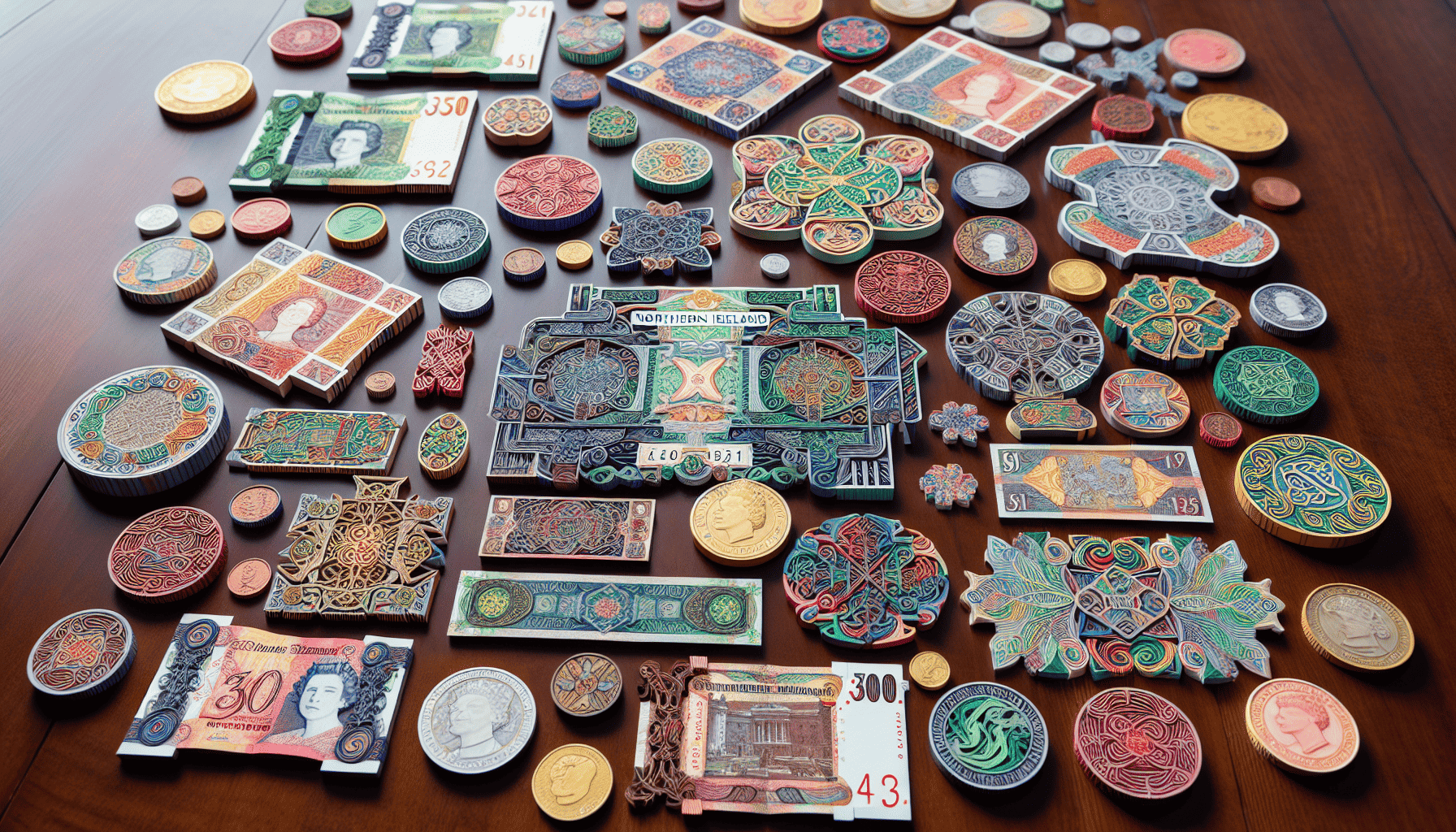
The British Pound Sterling serves as the official currency in Northern Ireland. Yet, you’ll often encounter banknotes bearing the insignia of Ulster Bank, Danske Bank, or Bank of Ireland. These local entities possess the authority to circulate their exclusive banknotes in £5, £10, £20, £50, and £100 denominations. Their distinct designs infuse a unique local touch into the conventional British Pound Sterling.
Such an arrangement of local banks issuing notes is rather uncommon. This distinctive system is shared only by Northern Ireland, Scotland, and the Channel Islands. Scottish banks also issue their own banknotes, similar to the practice in Northern Ireland. Therefore, you will spend pounds sterling for all your transactions in Northern Ireland, even though the notes may look different.
In contrast, the Republic of Ireland uses the euro currency, and you will spend euros there. Historically, the Irish currency was the Irish pound before the transition to the euro.
Legal Tender Across the Region
When it comes to legal tender, Northern Ireland’s banknotes hold an interesting position. The standard unit of currency is one pound sterling, which is legal tender within Northern Ireland and is used for the settlement of debts throughout the UK, making these notes as useful as the Bank of England notes. However, they are not considered legal tender outside Northern Ireland. This may seem like a riddle wrapped in a mystery, but it’s just another intriguing aspect of Northern Ireland’s financial landscape.
A noteworthy development in recent years has been the shift from paper to polymer notes. The advantages of polymer notes include:
- Waterproof
- Dirtproof
- More durable
- Secure
- Recyclable
These features extend the lifespan of the notes and promote environmental sustainability in comparison to traditional paper notes. However, polymer notes also present a few challenges, such as sensitivity to extreme temperatures and handling issues.
Polymer and Paper Notes
At the heart of Northern Ireland’s currency evolution is the transition from paper to polymer notes. Polymer notes are more resilient and secure, while paper notes are still accepted but are being phased out. The transition has been gradual, starting with the Ulster Bank £50 note on June 23, 2021, and the £5 and £10 notes on September 30, 2023. This move to polymer notes is driven by their increased durability, longevity, and improved security features that make them more difficult to counterfeit.
The polymer notes come equipped with state-of-the-art security features including:
- Holograms
- Raised print
- Microlettering
- UV ink
Alongside the shift to polymer notes, coin designs and materials in Northern Ireland have also evolved over time, reflecting changes in technology and the broader history of Irish coinage.
These features make them a hard nut to crack for counterfeiters. This commitment to innovation and security is a shining example of the northern bank sector in Northern Ireland, demonstrating dedication to addressing the changing needs of the public.
The Role of Ulster Bank and National Westminster Bank Plc
Ulster Bank and National Westminster Bank Plc hold significant roles in Northern Ireland’s unique banking landscape. Bank of Ireland and Ulster Bank are two banking entities that hold the authority to release banknotes in Northern Ireland. The third being First Trust Bank. Ulster Bank has been issuing its own banknotes since its establishment, a tradition as deeply rooted in Northern Ireland’s history as the Giant’s Causeway.
Established in 1836, Ulster Bank has been an integral part of the region’s banking sector. It issues a variety of banknotes, including the widely recognized £20 note. National Westminster Bank Plc, the parent company of Ulster Bank, does not issue separate banknotes but does so under the Ulster Bank branding. These banks, with their unique banknotes, contribute to the rich tapestry of Northern Ireland’s currency system. In addition to issuing banknotes, they also provide a range of account services to customers in Northern Ireland.
Two Currencies in the Region
Ireland presents a unique financial landscape, with two currencies circulating side by side on the island. In Northern Ireland, the official currency is the pound sterling, the same currency used throughout the United Kingdom, including England, Scotland, and Wales. Just across the border, the Republic of Ireland operates with the euro as its official currency, issued by the Central Bank of Ireland. This dual-currency situation is important for anyone planning to travel, shop, or do business in either part of the island.
When you visit Northern Ireland, you’ll need pound sterling for most transactions. The pound sterling consists of 100 pence, and you’ll find coins in denominations of 1p, 2p, 5p, 10p, 20p, 50p, £1, and £2, along with banknotes in various values. These notes are issued by several banks, including the Bank of England, Ulster Bank, Northern Bank, and Danske Bank, each adding their own distinctive designs to the same currency. Contactless payments are widely accepted in Northern Ireland, making it easy to pay with debit cards, credit cards, or even your smartphone for everything from a cup of coffee to a train ticket.
In contrast, the Republic of Ireland uses the euro, divided into 100 cents, with coins ranging from 1c to €2 and banknotes in higher denominations. While the euro is not accepted as standard currency in Northern Ireland, you may find that some large stores or businesses near the border will accept both currencies, especially in busy cities or tourist areas. However, it’s always wise to check the exchange rate and ask about any fees or charges attached to using a different currency, as the rates and acceptance can vary.
Travelers moving between Northern Ireland and the Republic should be mindful of the two currencies in circulation. It’s a good idea to carry some local cash for small purchases, as well as a debit or credit card for larger payments. Most retailers, banks, and post offices in both countries offer currency exchange services, and you can find up-to-date exchange rates online or at currency exchange offices. When using your card, check with your bank about any international transaction fees or charges that may apply.
Understanding the difference between the pound sterling and the euro, and knowing where each is accepted, will help you avoid confusion and unnecessary fees. Whether you’re exploring the vibrant cities of Northern Ireland or the scenic countryside of the Republic, being prepared with the right currency—and knowing how to pay—will ensure your trip is smooth and hassle-free.
Handling Money Transactions
Much like many other regions, Northern Ireland boasts an efficient system for managing foreign transactions. These transactions require conversions to the Pound Sterling at the prevailing exchange rate. So, whether you’re buying a pair of traditional Irish dancing shoes or paying for a guided tour of the Titanic Belfast, you’ll be using the Pound Sterling (£) for all transactions.
The determination of exchange rates for these transactions, also known as currency conversions, is as intricate a process as weaving a Celtic knot. The exchange rates are typically based on the Bank of England’s rates, with amounts in sterling determined at the time of the transaction according to the current exchange rate. Always check if there is any charge attached to currency exchange services, as some providers may include a fee for the transaction.
Be aware that using certain cards or withdrawing cash from ATMs may incur an additional fee. For further details on transaction costs and exchange services, see the following sections.
Foreign Transactions and Exchange Rates
Navigating the world of foreign transactions and exchange rates can feel like trying to traverse the Giant’s Causeway in the fog. However, with the right understanding, it becomes a walk in the park. The exchange rate of the British pound relative to other major currencies, including those from other countries in Europe and beyond, fluctuates depending on various factors. That’s why it’s recommended to consult reliable sources such as OFX or XE for the most up-to-date rates.
Exchange rates are determined by a variety of elements, including:
- Inflation
- Interest rates
- Government/public debt
- Political stability
- Economic productivity
- Significant external occurrences like Brexit
The Bank of England computes and makes available daily figures for Effective Exchange Rate Indices (ERIs) for significant international currencies, including sterling.
Bear in mind, though, that foreign transactions in Northern Ireland may incur additional fees. These fees vary depending on the card and bank, so it’s always a good idea to check with your bank.
Widely Accepted Payment Methods
Despite its deep historical roots, Northern Ireland keeps pace with modern payment methods. Card payments are a common method for financial transactions, with credit cards—particularly Visa and MasterCard—enjoying wide acceptance. Debit cards are also widely used for purchases and ATM withdrawals, offering features like chip and PIN security.
And for those who prefer a touch of the modern, Northern Ireland embraces the digital age with open arms. Digital payment methods such as Apple Pay and Google Wallet are extensively accepted, making transactions as easy as a tap of the phone. Contactless payment is especially convenient for small transactions, allowing you to simply tap your debit card for purchases up to the local limit.
Currency Exchange Services
Northern Ireland offers a plethora of options for currency exchange services. You can access these services at a number of locations, including:
- Banks
- Post offices
- Hotels
- Tourist offices
- Bureaux de Change
It’s like having a personal currency exchange concierge at your service.
Hotels in Northern Ireland provide currency exchange services to their patrons. Bureaux de Change, dedicated currency exchange offices, are situated in various locations across Northern Ireland. They offer convenient services, albeit with higher commissions and fees, but when you’re in need of quick cash, they can be a lifesaver.
Issuing Banks and Their Notes
The Northern Ireland banknotes, issued by local banks, are like colorful pieces of a financial jigsaw puzzle. Each banknote, with its unique design and features, tells a story. The Bank of England issues banknotes in 6 different denominations:
- 1 pound
- 5 pounds
- 10 pounds
- 20 pounds
- 50 pounds
- 100 pounds
All the notes have similar colourful designs and security features to protect them from forgery. However, the 1 pound note is no longer distributed by any bank in Northern Ireland.
Some banknotes, like the paper 50 and 100 pound notes issued by Ulster Bank, have been retired from the game and are no longer accepted as legal tender. The First Trust Bank notes have been superseded by Bank of England banknotes and became invalid as legal tender after June 30, 2022. Before the adoption of the current system, Ireland used the Irish pound as its official currency, and Irish coins were notable for their distinctive designs and cultural significance, marking an important chapter in the region’s monetary history. Yet, the design of current banknotes, from the 5 pound note issued by Bank of Ireland and Ulster Bank to the euro notes featuring generic depictions of Northern Irish people, adds color and character to the currency system.
Unique Features of Local Banknotes
Northern Ireland banknotes are not just currency; they are canvases showcasing the region’s cultural heritage. They feature designs that illustrate native creatures, plants, and cultural elements, reflecting local music, culture, migration, indigenous species, and other aspects of Northern Irish culture. It’s like holding a piece of Northern Ireland’s rich tapestry in your hands.
Landmarks of Northern Ireland, from the bustling Belfast Harbour to serene rural landscapes, find a place on these banknotes. They also represent historical events, such as the migration of animals and people, dwelling in nature, and the accomplishments of women from Northern Ireland. The £10 banknote, commemorating traditional food, native plants, and animals of Northern Ireland, and the polymer £50 note, acknowledging the accomplishments of women, are particularly distinctive.
Preparing Your Finances for Travel
Preparing your finances for a trip to Northern Ireland is akin to packing for a journey. You need to know what to bring, how much to bring, and how to use it when you arrive. Depending on the country you are visiting from, you may need to prepare differently. The first item on your financial packing list should be the Pound Sterling (GBP), the recommended currency for use in Northern Ireland.
Keeping an eye on the exchange rate between your home currency and the Northern Ireland pound is as crucial as checking the weather forecast before your trip. At present, the exchange rate between the US dollar and the Northern Ireland pound is 1 USD = 0.73 GBP, but it’s always prudent to verify the most recent rates prior to embarking on a journey.
Also, remember that credit cards, especially Visa and MasterCard, are widely accepted, making them a valuable travel companion. However, don’t forget to check with your credit card provider about potential fees associated with foreign transactions. Travelers from other countries should also check their card and currency requirements before visiting Northern Ireland.
Protecting Against Loss and Theft
Just like in any travel destination, it is paramount to secure your funds while traveling in Northern Ireland. Think of it as having an invisible shield around your wealth. Here are some tips to keep your money safe:
- Use discreet leg wallets or money belts to hide away travel money and keep cash out of sight.
- Refrain from carrying large sums of money.
- Be mindful of commonplace travel scams.
In the unfortunate event of a lost or stolen credit card, a swift response can prevent a mountain of headaches. Contact the Card Services team at Freephone 0800 0391 140 or at 028 9033 0099, which is available 24 hours a day. If valuables are stolen, report the theft to the Police Service of Northern Ireland promptly and provide a comprehensive description. Vigilance and quick action are the best defenses against loss and theft.
Summary
Navigating Northern Ireland’s unique currency landscape can be as exhilarating as exploring its lush green landscapes and dramatic coastlines. From local banks issuing their banknotes to the use of polymer notes, Northern Ireland’s currency system is a tapestry of tradition and innovation. By understanding the intricacies of currency, exchange rates, and safe financial practices, you are well-equipped to make your journey through Northern Ireland a memorable and hassle-free experience.
Frequently Asked Questions
Does Northern Ireland have its own currency?
Northern Ireland does not have its own currency; it is part of the United Kingdom and uses the pound sterling (£) as its official currency. Those travelling to both the North and South of Ireland must have both pound sterling (£) and euro (€) on hand.
You cannot use euro for transactions in Northern Ireland, except in some border areas or specific businesses that may accept it.
Can I use English money in Northern Ireland?
Yes, you can use English money in Northern Ireland, as Bank of England banknotes are permitted to be used there.
Can you accept Northern Ireland banknotes in England?
Yes, you can accept Northern Ireland banknotes in England as they are readily accepted there.
What is the difference between polymer and paper notes?
Polymer notes are more durable, secure and eco-friendly than paper notes, which are gradually being replaced.
What precautions should I take to protect against loss and theft while traveling in Northern Ireland?
To protect against loss and theft while traveling in Northern Ireland, use discreet leg wallets or money belts to hide away travel money, keep cash out of sight, refrain from carrying large sums of money, and be mindful of commonplace travel scams.