
Free Entry to the Giants Causeway: How to See the Causeway for Free?
Table of Contents
- Option 1 – National Trust Membership
- Option 2 – Park Elsewhere and Walk
- Option 2a – Park At the Giant’s Causeway and Bushmills Railway?
- What Time is the Giants Causeway Open (Opening Hours)?
We are often asked, “Can you visit the Giant’s Causeway for free?” The simple answer is yes, you can visit the Giants Causeway for free. However, it’s not easy, and you’ll be missing out on things like access to the Giant’s Causeway Visitor Centre,
On the world-renowned Causeway Coast, the Giant’s Causeway UNESCO World Heritage site is one of Northern Ireland’s top attractions. It’s one of Europe’s best-known natural wonders. And yet, despite being an internationally renowned site, it doesn’t get nearly enough attention. That’s why we decided to create this site.
In this article, we will look at the three ways you can visit the Giant’s Causeway site for free or at least on a budget.
Geology and Formation
The Giant’s Causeway is one of Northern Ireland’s most remarkable natural wonders, famous for its striking black basalt columns that stretch out into the sea. This unique site was formed around 60 million years ago, when intense volcanic activity beneath the earth’s surface caused molten basalt to surge upwards. As the lava cooled, it contracted and cracked, creating the iconic interlocking columns you see today. Most of these columns are hexagonal, though you’ll spot some with four, five, or even eight sides, and their heights vary depending on how quickly the lava cooled in each spot.
Visitors to the site can get hands-on with the science behind the causeway at the interactive exhibition inside the visitor centre. Here, you’ll discover fascinating displays that explain how the causeway was shaped by ancient volcanic eruptions and learn more about the geology that makes this UNESCO World Heritage Site so special. Whether you’re a geology enthusiast or just curious about how the landscape was formed, the visitor centre offers a deeper look at the forces that created this dramatic stretch of the Causeway Coast.
History and Culture
Beyond its geological marvels, the Giant’s Causeway is steeped in history and legend. According to Irish mythology, the causeway was built by the mighty Irish giant Fionn MacCumhaill, who wanted to cross the sea and challenge the Scottish giant Benandonner. Irish landscapes are full of mythic settings, and the highest mountain in Ireland also holds a special place in the nation’s heritage. The story goes that Fionn constructed the causeway as a bridge to Scotland, and the dramatic landscape you see today is all that remains of his handiwork after a legendary showdown.
The site’s cultural significance doesn’t end with myth. The National Trust has managed the Giant’s Causeway Visitor Centre and the surrounding area since 1961, preserving both its natural beauty and its rich heritage. Visitors can explore the site’s history through guided tours and interactive exhibitions at the visitor centre, where stories of ancient forts, settlements, and the people who lived along the Causeway Coast come to life. Whether you’re drawn by the tales of giants or the real history of the site, the Giant’s Causeway offers a fascinating glimpse into Northern Ireland’s past.
Option 1 – National Trust Membership
Buy a National Trust Annual Membership. This is our method, and it’s the best value for money. With a range of membership categories available, it’s worth a look. Especially if you are visiting the Giant’s Causeway visitor centre regularly or planning to visit other National Trust attractions such as Carrick-a-rede or Downhill. National Trust members receive free entry and parking at the Giant’s Causeway.
When you visit the Giants Causeway visitor experience with a National Trust membership, you’ll get free parking at the Giants Causeway Visitor Centre Car Park, access to the UNESCO World Heritage Site Visitors Centre and extras like the audio guide and shuttle bus. It is advisable to book tickets in advance during peak times to ensure entry to the visitor centre. National Trust membership also provides access to a guided tour, and there are various giant’s causeway tours available for those seeking a more in-depth experience. A guided tour is included as part of the visitor experience for members.
National Trust Memberships
Adults (26 or over) £76.80 or £6.40 per month direct debit
Young Member (age 18-25) – £38.40 per year
Child – £10 per year
Family (2 Adults) – £133.80 or £11.30 per month
Family (1 Adult) – £83.40 or £6.95 per month
Couple – (2 Adults over 26) – £127.20 or 10.60 per month
Your membership will give you access to over 500 places t visit and free parking at these accrosse the UK and Ireland. It may be worth looking into the National Trust for Scotland or The National Trust for Ireland/An Taisce as these offer potentially better value if you live in those countries.
In , your membership will access famous sites such as Carrick a rede rope bridge, Dunluce Castle, Mount Stewart, Mussenden Temple and Castle Ward.
When you consider that a trip to the Giants Causeway visitor experience will cost a family of four £32.50 each time, then the same again for Carrick a rede rope bridge, and Mount Stewart and Castle Ward plus parking at Downhill and Porstewart Strand, it’s easy to see why this is, in our opinion, the best option.
Option 2 – Park Elsewhere and Walk
So option 2, like all things cheap, you get what you pay for and it’s a fair bit of hassle. The main car park at the visitor centre is the most convenient and central option, but if you want to avoid the higher fees, these alternative parking options may suit you. So it’s really up to you. We’ve split this into three subsections to allow for the main ways.
Ok, if you are determined to save a couple of pounds, then this is the option for you. The Causeway Coast Way parking lot is another alternative, though it requires a longer walk to reach the site.
During the busy summer months, parking can be especially challenging, and some nearby fields may be used as overflow parking.
Option 2a – Park At the Giant’s Causeway and Bushmills Railway?
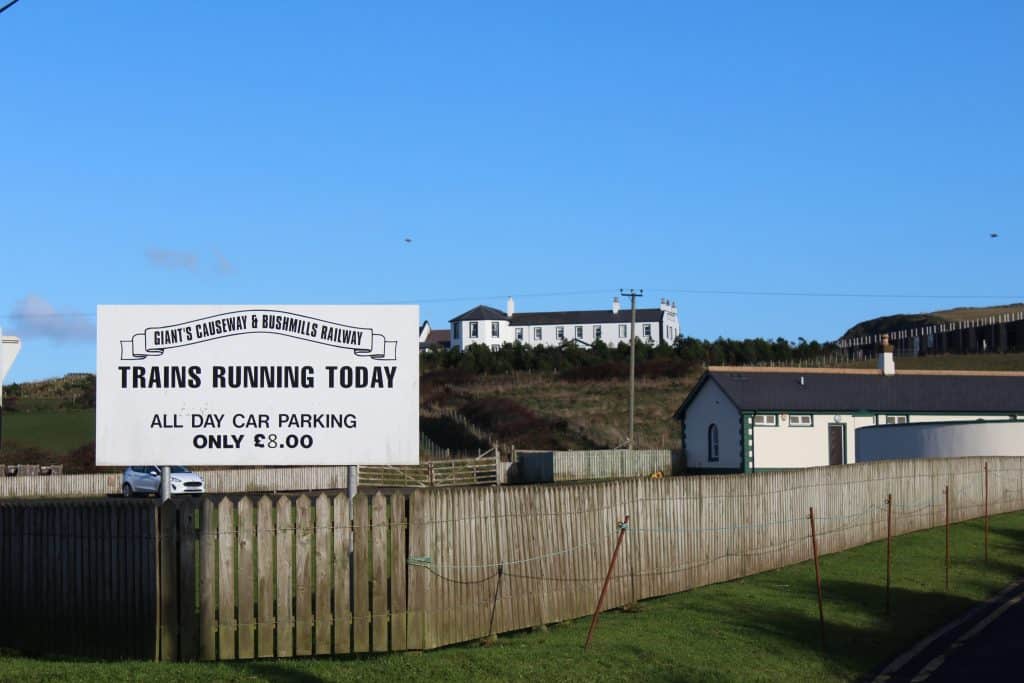
There is a car park at the Giant’s Causeway station for £8.00 per vehicle. The Giant’s Causeway station serves as a convenient access point for visitors, offering dedicated parking. Many tourists bring their cars to the Giant’s Causeway station and then take the train to Bushmills, where they can buy tickets to the Giant’s Causeways.
But if you are only going to the Giants Causeway, the £20+ saving may appeal. From here you can make the short walk along the tramway extension or along the main road (just be careful as it’s quite narrow).
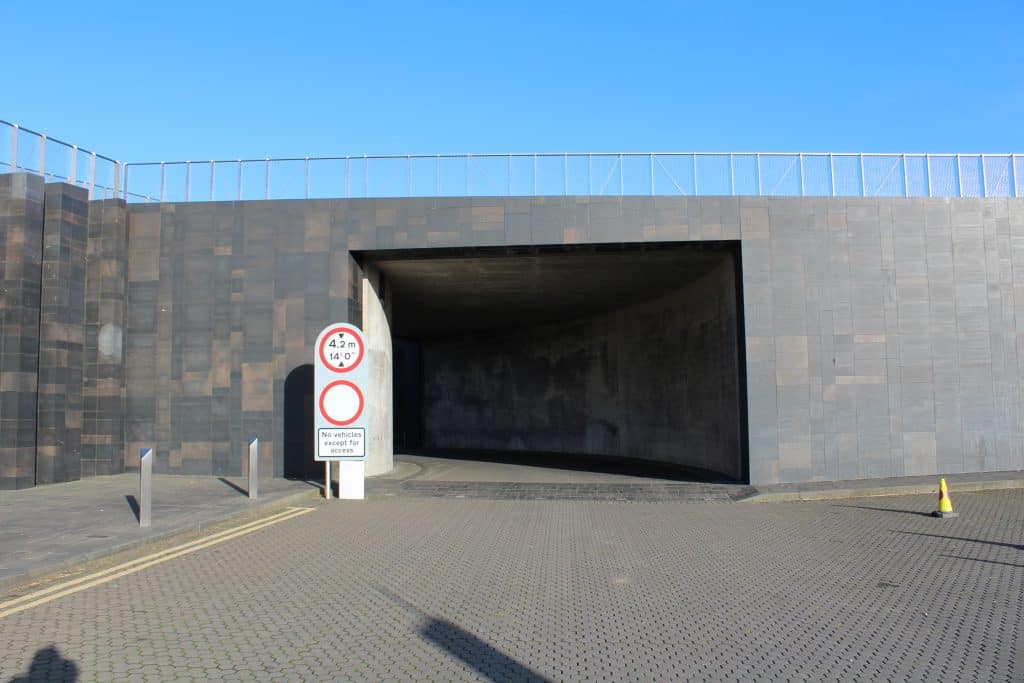
When you get to the Giants Causeway, you can avoid the visitors centre, where you have to pay entry – in fairness it’s quite good and you’ll get the audio tour option. To do this you walk along the side of the visitor centre – it’s not sign posted for obvious reasons. About 50m along the side you will see what looks like a good entrance at the far end (see the image below), go through this and you can walk down to the causeway Stones…or see if you can get on the bus.
Option 2b – Bushmills Park & Ride
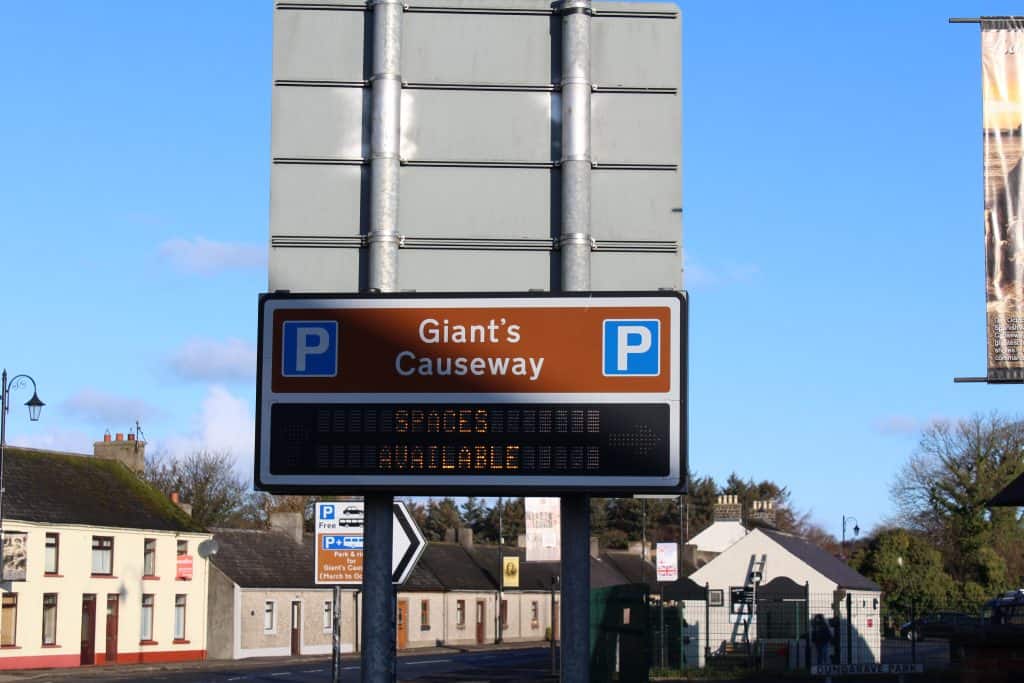
IN the nearby village of Bushmills there is a park and ride opposite the Bushmills Inn at Dundrave. THe car park takes around 100 cars and the bus runs every 15 mins during the times that the Causeway os open. It costs £2 per person which is a massive saving on the National Trust Car Park. Once you get dropped off outside the visitor centre at the Causeway, follow the above instructions to see the Giants Causeway via the tunnel.
Option 2c – Only True Free Way To See the Giants Causeway
The Millenium or Dundrave Car Parks Bushmills (10 minute walk)
There are two free car parks in BUshmills, the Milleneum Park carpark, situated at the Southern end of Main Street, around 50m from the Old Bushmills Distillery, and the Dindrave Car Park (the park and ride carpark) situated at opposite the Bushmills Inn.
Both of these Car parks are small and are regularly filled up during busy periods, however, if you are out early you can easily get a spot. THere is also plenty of on street car parking on Main Street. JUst be warned its a hotspot for cars getting damaged due tolarge vehicles coming through and it not being particularly wide.
THere arealso a couple of pay and display car parks around the town, however, you might as well use the park and ride if this is the case.
Walk from Portballintrae (about half an hour)
If you want to park your vehicle for free at Salmon Rock beach, take the half hour hike from Portballintrae. It’s a beautiful coastal walk, which takes you through some amazing scenery. You need good walking shoes though, because parts of the path can be muddy.
Walk From Dunseverick Castle (about 1 hour each way).
You can visit Dunseverick Castle by parking at the castle car parks and taking the 5.5 miles (one way) trail from there to the causeway. The scenery is beautiful and the trail, for most of its length, is well maintained.
The round trip between the castle and the Causeway is approximately 2 hours. However, if you don’t want to go back to the parking lot by the visitor centre, you can take the Translink Service 172 bus from near The Nook (just down from the visitor centre) back to Dunseverick Castle.
Here’s a quick Google Map showing the locations of the various businesses and car parking near the Giant’s Causeway.
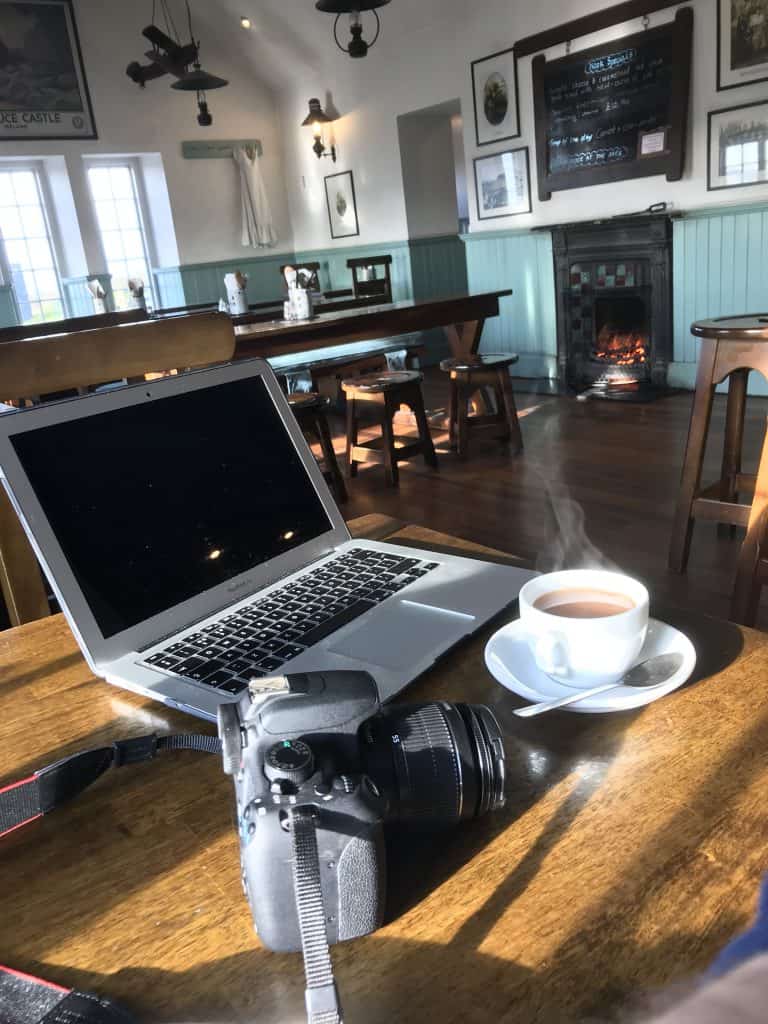
Free parking: We used to get free parking at the Nook Cafe when we visited before, but we found out they charge for parking now. So we decided to enjoy a cuppa and get warm beside the fire before we headed back to the car.
Safety and Accessibility
The Giant’s Causeway is designed to be welcoming and accessible for all visitors, ensuring everyone can enjoy this world-famous site. The visitor centre is fully equipped with wheelchair ramps and lifts, making it easy to access all areas of the building. Outside, the site features a network of walking trails and paths, many of which are relatively flat and suitable for most visitors. However, as the terrain can be uneven and sometimes slippery, especially in wet weather, it’s a good idea to wear sturdy, good walking shoes.
For those who may find the walk to the stones challenging, the National Trust operates a shuttle bus service from the visitor centre down to the causeway itself. This shuttle bus is especially helpful for visitors with mobility issues, families with young children, or anyone who prefers a more relaxed journey to the site. With these facilities in place, the Giant’s Causeway remains an accessible and enjoyable destination for everyone.
Food and Drink
A visit to the Giant’s Causeway isn’t complete without sampling some of the local food and drink. The visitor centre features a welcoming café where you can grab a quick snack, sandwich, or a hot drink to warm up after exploring the site. For those looking for something more substantial, the restaurant at the visitor centre serves up a range of traditional Irish dishes and local specialties, perfect for refueling after a walk along the coast.
If you prefer to bring your own food, there are several picnic areas dotted around the site where you can relax and enjoy the stunning scenery. Just a short stroll away, the Causeway Hotel offers a restaurant and bar with a menu full of local flavors, making it a great spot for a leisurely meal. Alternatively, the nearby town of Bushmills is home to a variety of restaurants, pubs, and cafes, so you’ll have plenty of options to choose from during your visit to the Causeway Coast. Whether you’re after a quick bite or a sit-down meal, you’ll find something to suit every taste.
What Time is the Giants Causeway Open (Opening Hours)?
It may be misleading because the National Trust Visitors’ Center always comes first when searching for the Giant’s Causeway experience. Many people assume that the Giant’s Causeway opens and closes simultaneously as the visitors’ centre. In fact, as a national park, I’d imagine that the Giant’s Causeway is pretty much available to the public indefinitely, even through the evening hours. However, I can’t think of any good reasons why anyone would want to visit the Giant’s Causeway after dark.
Regarding fairness, the National Trust lists the time for both the visitor centre and the coast open from 9 am to 5 pm, meaning that you could visit the Giant’s Causeway at sunrise and/or twilight on any day and through the earlier or later daylight hour. However, you might want to avoid visiting during the middle of the day when the sun is high overhead. Also, some visitors may not appreciate having their photo taken by someone wearing a wetsuit.
Because the shuttle bus doesn’t run during off-hours (i.e., when there aren’t any visitors), you don’t need to worry about taking public transport to get from one end of town to the other. You can take a short walk instead.
During our later visits, we heard whistles but didn’t see any signs of people rushing off. We saw some National Trust staff at the main entrance who seemed to be watching us. There weren’t any signs of an urgent need to leave.
There are several ways to visit the Giant’s Causeway, either for free or an extremely low price. For example, parking at the official car park would be £39 per adult.
If three grown men used the alternative Giant‘s Causeway parking listed above, they would pay just £5 for their parking. A savings of £34!
Finally
DO NOT PARK ON THE MAIN ROAD WHEN VISITING!
THis si for a couple of reasons, the main one being that the local authorities are known to ticket cars at will, clamp cars and even remove cars that are in (what they believe) dangerous places. But also, don’t be that guy and block everyone else in. THe roads were not designed for the modern levels of traffic and are already quite narrow without your car parked there.