The peace walls of Belfast stand as powerful physical reminders of Northern Ireland’s complex past, yet they remain an integral part of the city’s present. These towering barriers, which have divided Catholic nationalist and Protestant loyalist communities for over five decades, offer visitors a unique window into the legacy of The Troubles and the ongoing journey toward reconciliation.
More than just historical artifacts, Belfast’s peace walls continue to shape daily life for thousands of residents while serving as one of the city’s most significant tourist attractions. Understanding these barriers—their origins, current locations, and cultural significance—provides essential insight into Belfast’s transformation from a conflict zone to a vibrant, modern city.
This comprehensive guide will help you navigate the history, locations, and visiting options for Belfast’s peace walls, ensuring you approach these sensitive sites with the knowledge and respect they deserve.
What Are Belfast’s Peace Walls
Belfast’s peace walls are physical barriers that separate predominantly Irish republican or nationalist (mostly Catholic) communities from loyalist or unionist (mostly Protestant) neighborhoods across Northern Ireland. These structures represent far more than simple boundaries—they are defensive architecture born from decades of sectarian conflict.
Over 60 peace walls exist across Belfast today, stretching approximately 34 kilometers (21 miles) in total length. The barriers vary dramatically in construction and design, ranging from the original temporary structures of corrugated iron and barbed wire to modern permanent installations of brick, steel, and concrete.
The walls range in height from 3 to 7.5 meters tall, with some featuring gates that provide controlled access between communities. These gates remain a crucial aspect of daily life, typically closing nightly around 6:30 PM for security purposes. Many gates remain locked throughout the night, reopening the following morning to allow vehicle and pedestrian access.
The most famous barriers are located primarily in north and west Belfast, with the iconic interface between Falls Road (nationalist) and Shankill Road (loyalist) serving as the most visited and photographed peace wall in the city. Despite their name, these “peace” walls were not built to foster peace but rather to reduce violence and protect residents during periods of intense sectarian conflict.
History of Belfast Peace Walls
The first peace walls were erected in August 1969 by the British Army during intense street riots that marked the beginning of The Troubles—a period of violent conflict that would last until the Good Friday Agreement in 1998. These initial barriers were hastily constructed using corrugated iron and barbed wire as temporary structures designed to separate working-class Catholic and Protestant communities following severe sectarian violence.
The Battle of the Bogside in Derry in August 1969 sparked riots in Belfast that led to the deployment of British troops and the construction of the first peace lines. Originally intended as emergency measures lasting only weeks or months, these temporary structures became permanent fixtures as civil unrest continued and escalated throughout the 1970s and 1980s.
The Cupar Way wall became the most prominent barrier—an 800-meter stretch of concrete, brick, and steel fencing that separates the Falls Road from Shankill Road in west Belfast. This wall serves as a stark reminder that communities once lived side by side before being physically divided by violence.
Remarkably, the number of peace walls actually increased after the 1998 Good Friday Agreement, despite the official end of The Troubles and the establishment of a power-sharing government. Several new barriers were erected during the two decades following the peace process, as communities sought continued separation for security and psychological comfort.
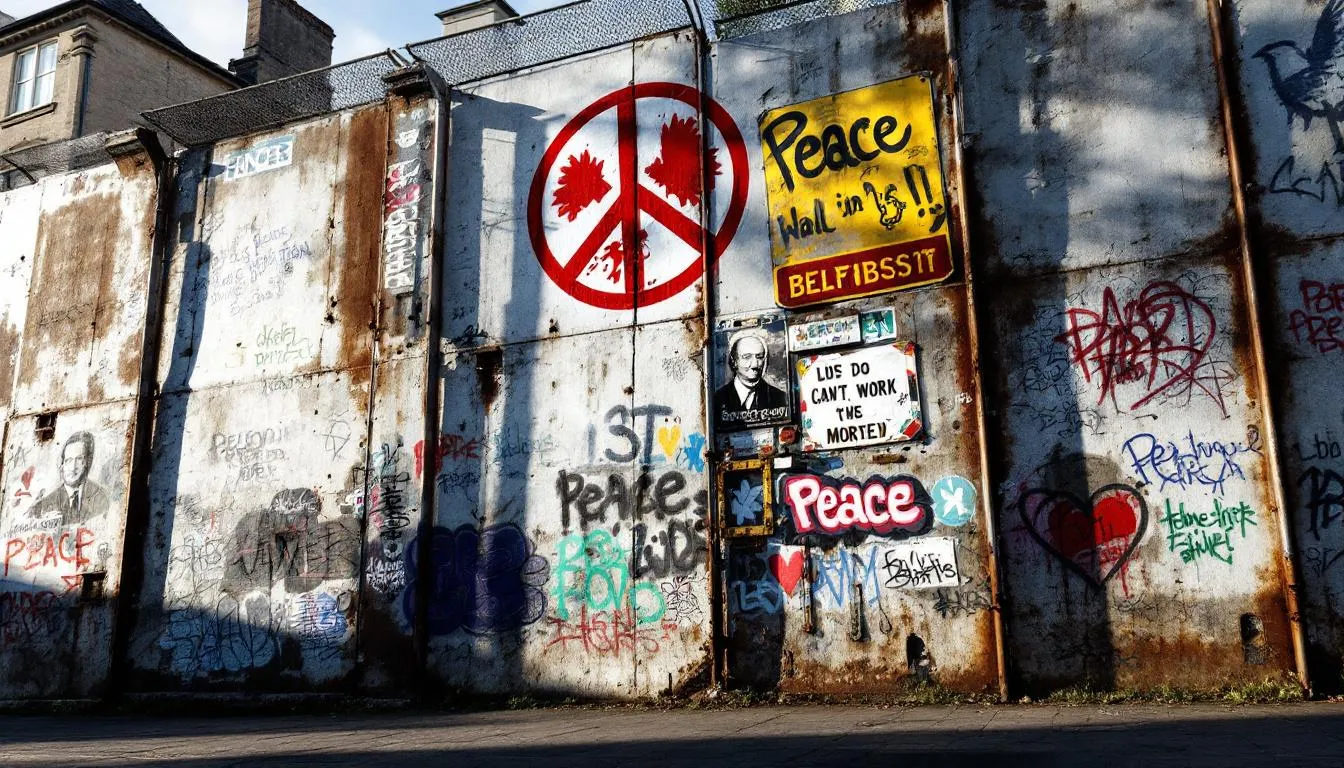
What began as temporary corrugated iron structures have evolved into sophisticated barriers incorporating CCTV surveillance, lighting, and artistic elements. The walls that once served purely defensive purposes now function as canvases for political murals, peace messages, and community expression.
Current Locations and Layout
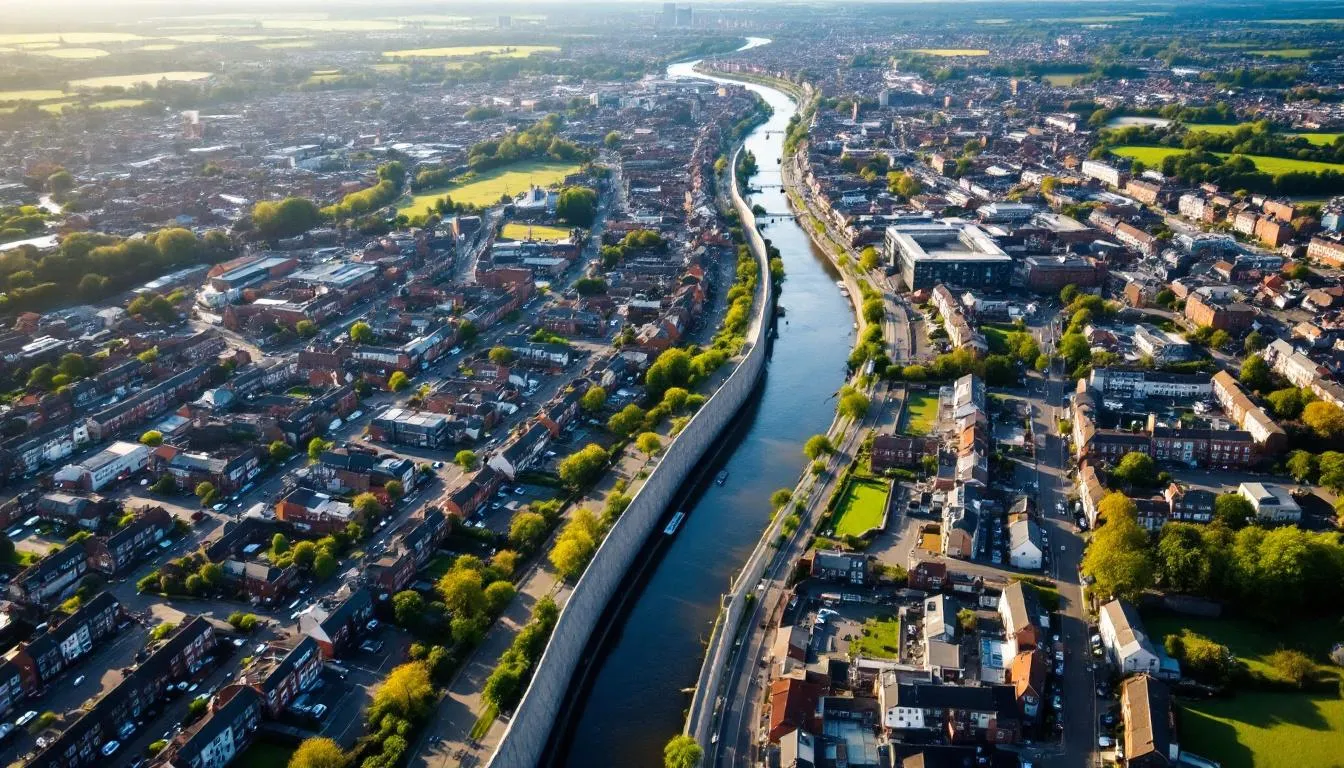
West Belfast features the most famous peace walls, including the Falls Road and Shankill Road interface at Cupar Way. This area contains some of the longest and most imposing barriers in the city, with walls reaching maximum heights and featuring elaborate gate systems. The Falls-Shankill interface remains the most accessible for tourists and the most heavily documented by visitors and media.
North Belfast contains approximately half of all peace walls in Belfast, concentrated in sectarian enclaves where communities live in close proximity. These barriers tend to be shorter but more numerous, creating a complex network of separation barriers throughout residential neighborhoods. Areas like Crumlin Road and surrounding districts feature multiple small-scale barriers and closed roads that redirect traffic and foot traffic.
East Belfast barriers serve to separate areas like the nationalist Short Strand from loyalist neighborhoods such as Cluan Place. The Short Strand area, in particular, represents one of the most isolated nationalist communities, surrounded by loyalist areas and requiring significant barriers for protection and separation.
Additional peace walls exist beyond Belfast in other Northern Ireland cities including Portadown, Derry/Londonderry, and Lurgan. These smaller cities experienced their own sectarian divisions during The Troubles, leading to the construction of local separation barriers that remain in place today.
The gate systems allow vehicle and pedestrian access during daytime hours but remain locked overnight for security. Some gates remain permanently closed or only open for special occasions, while others operate on regular schedules that local residents incorporate into their daily routines.
How to Visit Belfast Peace Walls
Self-guided walking tours offer the most budget-friendly exploration option for visitors interested in Belfast’s peace walls. Early daytime visits are recommended for safety, particularly for solo travelers unfamiliar with the city’s neighborhoods. The most accessible starting point is the Falls Road area in west Belfast, where public transportation provides easy access to major peace wall locations.
Black cab tours provide local driver insights and personal stories from both communities, typically lasting approximately one hour with stops at multiple peace wall locations. These tours often include drivers who lived through The Troubles and can share first-hand accounts of life before, during, and after the construction of the barriers. Many drivers represent either nationalist or loyalist perspectives, offering unique insights into how different communities view the walls.
Organized walking tours feature ex-combatants and former paramilitaries sharing first-hand accounts from both sides of the conflict. These tours provide the most authentic and detailed historical context, as guides often participated in or witnessed the events that led to the walls’ construction. The personal testimonies help visitors understand the human impact of the barriers on local communities.
Belfast City Sightseeing tours include peace walls as Stop #15 on their hop-on hop-off routes, providing a convenient option for visitors exploring multiple city attractions. These tours offer recorded commentary and allow visitors to explore at their own pace while ensuring they don’t miss other significant Belfast landmarks.
Combined visits with political murals create comprehensive cultural experiences, including the famous Bobby Sands mural on Falls Road and UVF Memorial Wall on Shankill Road. These murals serve as outdoor galleries documenting the political and cultural identity of both communities, providing context for understanding why the physical barriers became necessary.
Planning Your Visit
Cupar Way offers the most accessible viewing point for Belfast’s most prominent peace wall, featuring extensive artwork and graffiti that visitors can examine up close. This location provides the best photography opportunities and the most comprehensive view of how peace walls function in practice.
The best times for photography and safety considerations during solo visits are typically between 10 AM and 4 PM, when natural lighting is optimal and local activity is highest. Visitors should avoid late evening or early morning visits, particularly in more isolated areas of north and east Belfast.
Tourist information centers provide current maps and gate closure schedules, as these can change due to community events, construction, or security concerns. Planning ahead helps visitors maximize their time and ensures they don’t encounter unexpected closures.
Combining peace wall visits with nearby attractions in west Belfast creates full-day itineraries that include the Titanic Belfast museum, Ulster Museum, and historic city center. This approach allows visitors to understand the peace walls within the broader context of Belfast’s history and cultural development.
Peace Wall Murals and Cultural Significance
The Falls-Shankill peace wall features vibrant political artwork and is regularly included in Belfast’s famous mural tours. These murals serve multiple purposes: documenting historical events, expressing political beliefs, commemorating fallen community members, and increasingly, promoting messages of peace and reconciliation between two communities.
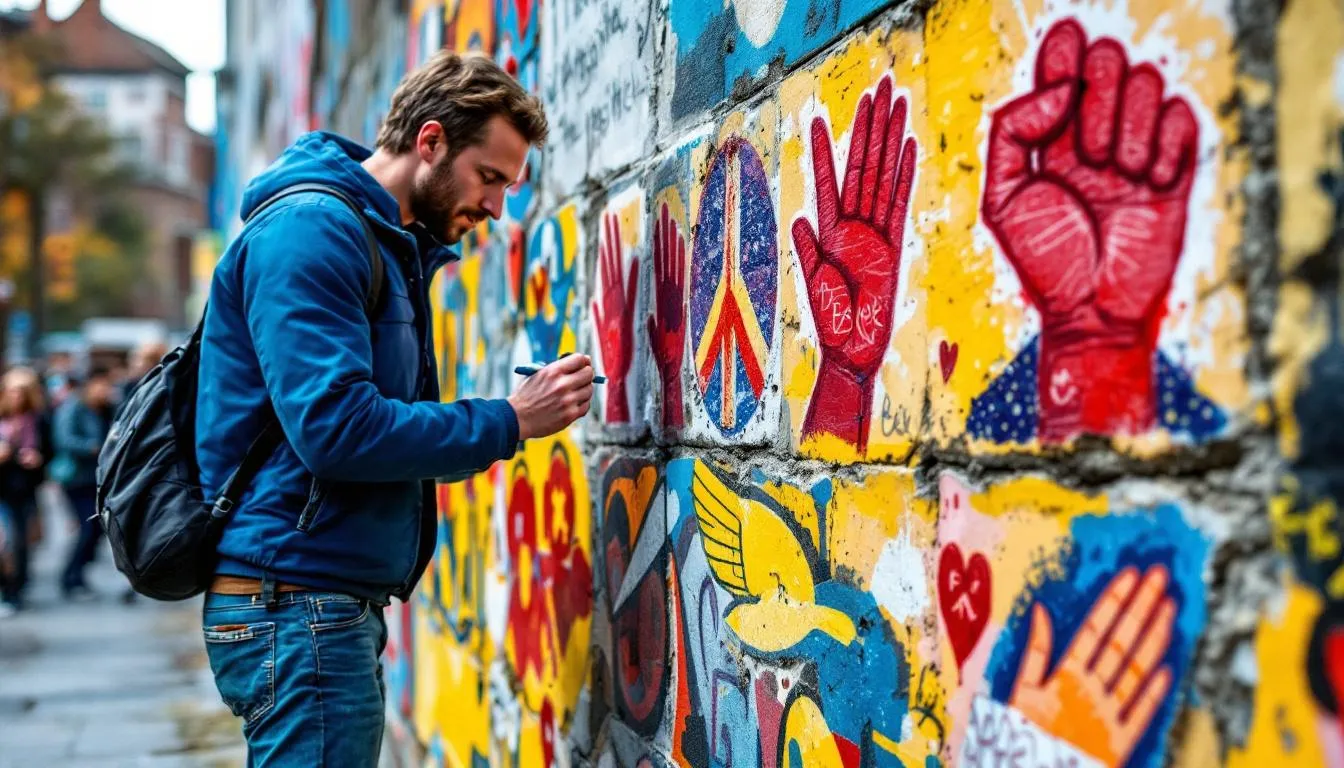
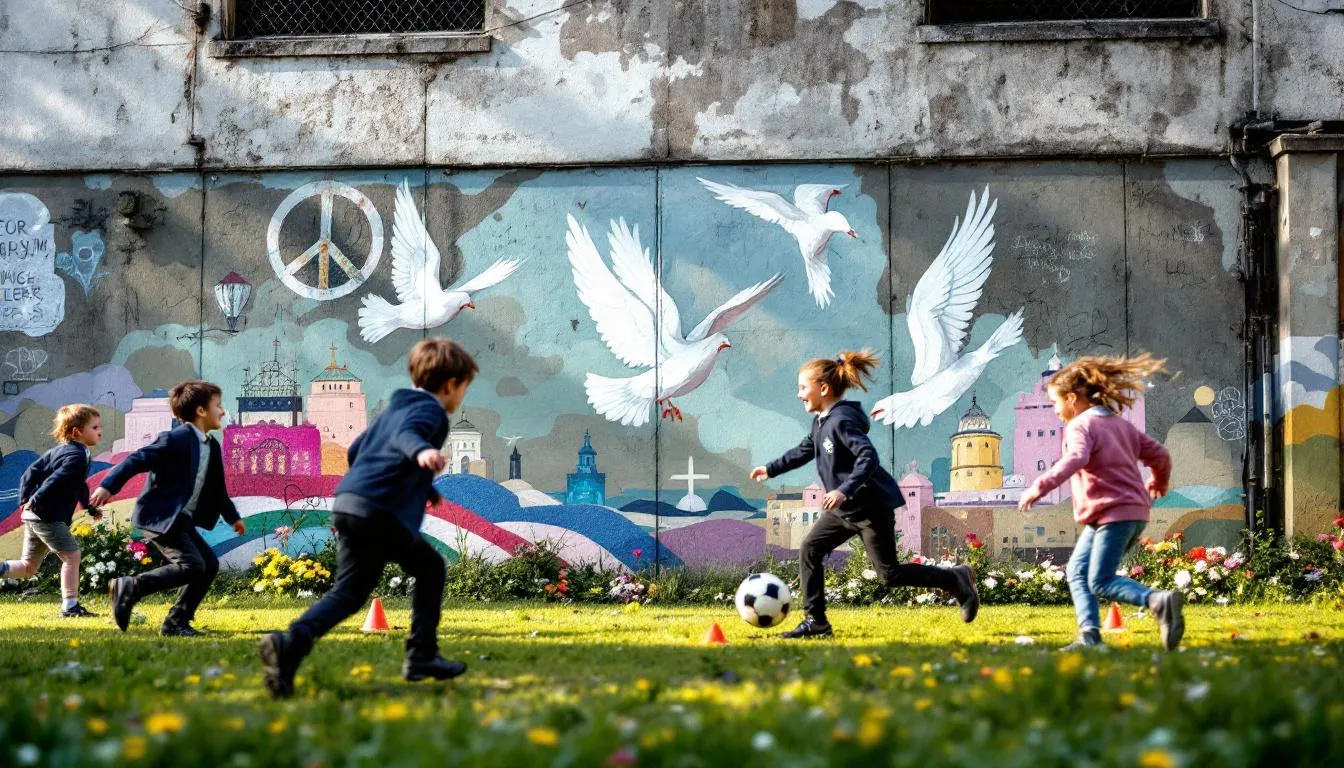
Community groups have transformed some walls with murals promoting peace and reconciliation, moving beyond the traditional political messaging toward more hopeful and unifying themes. These newer murals often feature children from both communities, symbols of peace, and calls for understanding rather than division.
Visitors can sign the peace wall as a symbol of hope and solidarity, joining thousands of tourists who have left messages of peace, unity, and support for Belfast’s communities. These signatures create a constantly evolving tapestry of international support for the peace process and serve as reminders that the world watches Belfast’s progress toward reconciliation.
The murals serve as an outdoor gallery documenting history, political messages, and cultural identity across generations. Older murals reflect the anger and defiance of The Troubles era, while newer works increasingly emphasize shared humanity and common ground between communities that share the same city.
Art reflects both division and aspiration for a peaceful future in Belfast communities, with some walls featuring murals painted collaboratively by artists from both sides of the divide. These collaborative projects represent significant breakthroughs in community relations and demonstrate the potential for unity through creative expression.
Daily Life Impact and Community Perspectives
Peace walls remain an integral part of Belfast residents’ daily routines, with regular gate closures affecting everything from school commutes to evening social activities. Local residents organize their lives around these barriers, choosing routes that avoid crossing between communities and timing activities to ensure they can return home before gates close for the night.
Communities have adapted to barriers as a normal part of neighborhood security measures, with many residents viewing the walls as protection rather than imprisonment. This adaptation represents a complex psychological relationship with the barriers—they provide security and familiar boundaries while simultaneously limiting movement and social interaction.
Ongoing surveys show a growing desire for peace and reconciliation among residents, particularly among younger generations who have no direct memory of The Troubles. However, this desire for peace often coexists with continued support for maintaining the physical barriers as insurance against potential violence.
Cross-community dialogue programs and shared education initiatives promote understanding between separated communities through controlled interactions and joint projects. These programs aim to build relationships that might eventually make the physical barriers unnecessary, though progress remains slow and community-driven.
The balance between community security needs and integration challenges continues to evolve as Belfast develops economically and socially. Some areas have seen successful integration projects, while others maintain strong preferences for continued separation and security.
Future of Belfast Peace Walls
The 2013 Northern Irish Executive commitment to remove all peace walls by mutual consent by 2023 has largely gone unmet, with only a small number of barriers removed or significantly modified. This timeline proved overly optimistic given the complex community emotions and ongoing security concerns that surround the barriers.
Only a small number of walls have been removed, including sections of the Crumlin Road wall in 2016, which served as a sign of progress and demonstrated that removal is possible when communities reach consensus. These successful removals typically involved extensive community consultation, alternative security measures, and ongoing support for integration activities.
Approximately 18 walls have been removed or modified over the past decade, representing gradual but measurable progress toward the goal of elimination. However, this pace suggests that complete removal will take many more years and require sustained political commitment and community support.
Community consent remains required for removal, with many residents preferring that walls remain for security and psychological comfort. Surveys consistently show that while residents desire peace, they often view the walls as necessary protection against potential violence, particularly during periods of political uncertainty.
Some walls have been replaced with shared community facilities and peace gardens promoting reconciliation, offering alternative models for how former barrier sites might be transformed. These replacement projects demonstrate creative approaches to maintaining safety while building bridges between communities rather than walls between them.
Frequently Asked Questions
Are peace walls still necessary in Belfast today? The debate between security and integration continues, with residents holding diverse views based on their personal experiences and community perspectives. While violence has dramatically decreased since the Good Friday Agreement, many residents still view the walls as necessary insurance against potential future conflict, particularly during politically sensitive periods.
How long have peace walls existed compared to the Berlin Wall? Belfast’s peace walls have stood longer than the Berlin Wall ever did—over 50 years compared to the Berlin Wall’s 28 years. This longevity reflects the complex nature of the conflict and the ongoing challenges of reconciliation in deeply divided communities.
Does Belfast remain a segregated city? Belfast maintains significant residential segregation, with peace walls serving as visible symbols of broader social divisions. However, the city center and many newer developments feature mixed communities, and younger generations show increasing willingness to live and work across traditional boundaries.
What’s the best way to photograph and respectfully visit peace walls as a tourist? Visitors should approach peace walls with sensitivity, remembering that these are living communities where people’s daily lives are affected by the barriers. Photography is generally permitted, but visitors should be respectful of residents, avoid climbing on walls or gates, and consider joining guided tours that provide historical context and support local businesses.
Are there safety considerations when visiting peace wall areas independently? While Belfast is generally safe for tourists, visitors should exercise standard urban precautions, stick to main roads during daylight hours, and avoid visiting during times of political tension or community celebrations that might heighten emotions. Joining organized tours provides additional safety and educational value for first-time visitors.
The peace walls of Belfast represent one of the world’s most accessible examples of post-conflict architecture and ongoing reconciliation efforts. These barriers tell a story that extends far beyond their concrete and steel construction—they document human resilience, community survival, and the complex path toward peace.
Whether you visit through organized tours or independent exploration, approaching Belfast’s peace walls with respect and understanding enriches both your travel experience and your appreciation for the ongoing work of building bridges between communities. These walls continue to evolve as Belfast moves forward, serving as both reminders of a difficult past and symbols of hope for a more integrated future.
Plan your visit to experience this important piece of Belfast’s story firsthand, contributing to the tourism economy that increasingly supports the city’s peaceful development while gaining unique insights into one of the most significant urban barriers in the modern world.