
What is the triquetra, and what does it represent? This ancient Celtic symbol, characterized by three interlaced arcs, holds a spectrum of meanings from unity and eternity to the mystical ‘power of three’ revered across various cultures. The triquetra has ancient Celtic roots, with historical origins and traditional usage deeply embedded in Celtic art, where it symbolized life, eternity, and spiritual beliefs. With roots extending beyond Christianity, the triquetra continues to signify strength, connection, and continuity, transcending time and tradition. Discover its significance and enduring appeal as we delve into the enigmatic world of the triquetra and its connection to ancient Celtic art, reflecting its place in historical and religious contexts.
Introduction to Celtic Symbols
Celtic symbols have long been at the heart of Celtic culture, serving as powerful expressions of spiritual beliefs, cultural identity, and artistic creativity. Among these ancient symbols, the Trinity Knot—also known as the Triquetra—stands out as one of the most recognizable and enduring. This ancient symbol, composed of three interlocking loops that form a distinctive triangular shape, is a testament to the intricate beauty of Celtic art and the profound spiritual meanings woven into every design. The Trinity Knot is more than just a decorative motif; it is a powerful symbol that represents unity, eternity, and the unbreakable connection between generations. Its presence in Celtic art, jewelry, and spiritual practices highlights its significance as a bridge between the physical and spiritual worlds. Deeply rooted in Celtic mythology and inspired by the natural world, the Trinity Knot continues to captivate with its timeless elegance and the spiritual depth it brings to Celtic symbolism.
Key Takeaways
- The triquetra is an ancient Celtic symbol representing various trinities, such as body, mind, and spirit, and carries significance across multiple cultures and religions including Paganism, Wicca, and Christianity.
- The symbol’s meaning has evolved over time, initially symbolizing concepts like strength, love, and unity in pre-Christian cultures, and later being adapted as a representation of the Holy Trinity in Christian art and belief. The triquetra has held different meanings across cultures and religions, highlighting its versatility and profound symbolism.
- The triquetra has seen a modern revival and is widely featured in contemporary art forms such as tattoos and jewelry, symbolizing personal beliefs, cultural heritage, and its historical values of power, unity, and eternity. Modern interpretations also associate the triquetra with love, family, legacy, and unbreakable connections, giving it personal and spiritual significance in today’s context.
The Essence of the Triquetra
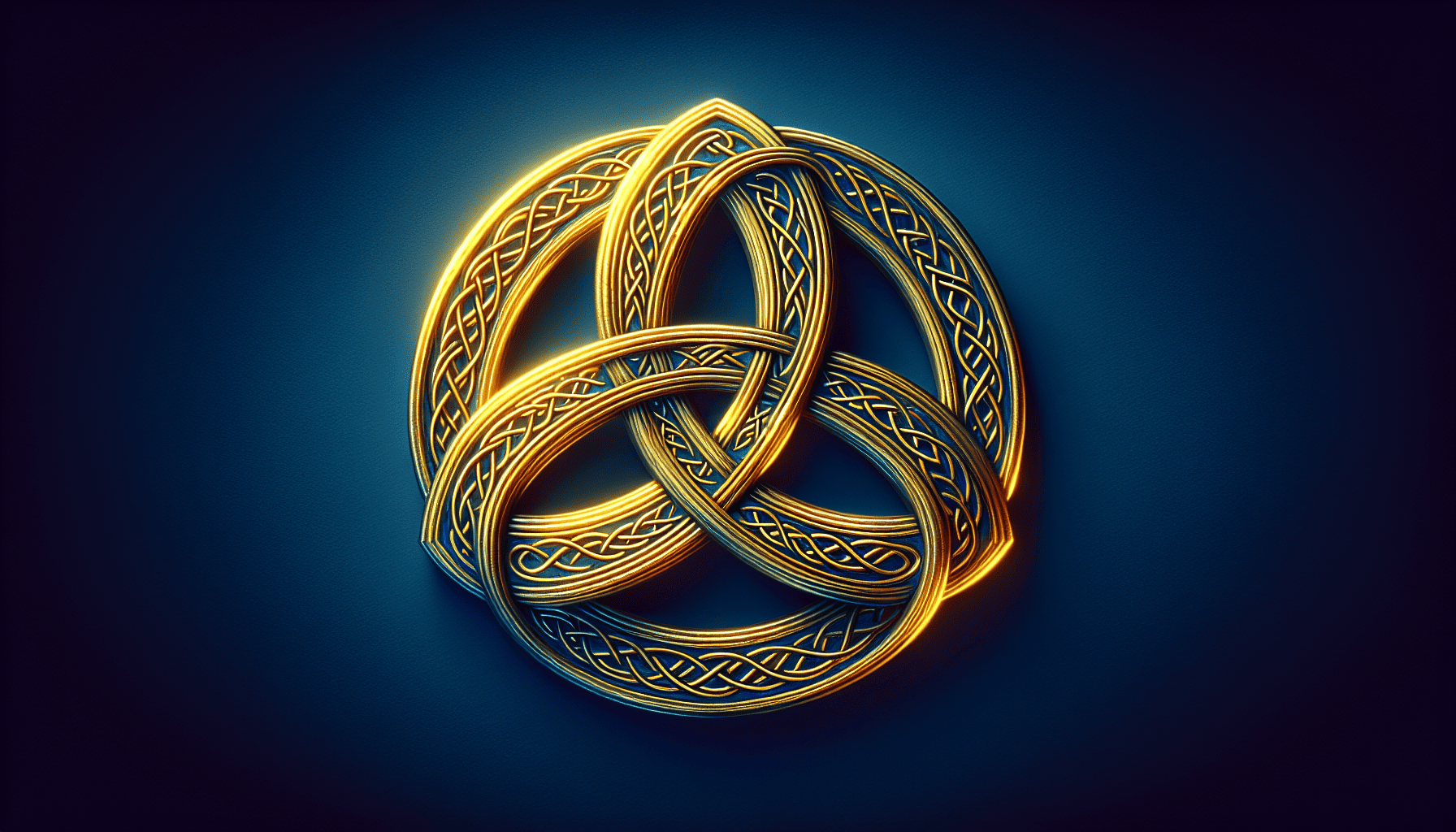
The triquetra is an ancient Celtic symbol that has captivated people for centuries. It is composed of three interlaced arcs, forming a design that is both simple and complex at the same time. The triquetra features interwoven loops and interlocking shapes, which are key elements that contribute to its timeless appeal. But the triquetra is more than just a pretty design. It carries a profound symbolic significance, representing unity, protection, and eternity. The three interlaced arcs represent the interconnectedness of body, mind, and spirit, symbolizing an unbroken and eternal line. In Celtic culture, it can also represent strength and love.
Exploring the triquetra further, we come across the notable importance of the number three. The power of three is a concept that is deeply rooted in many cultures and religions, and the triquetra is a powerful representation of this concept. Its deep symbolism and spiritual significance are recognized across various traditions, making it a revered emblem. The triquetra holds profound significance in Celtic tradition.
The Power of Three
The triquetra embodies the potency of three, illustrating diverse tri-cornered shapes and the life cycle encompassing birth, life, and death. The number three holds great significance in many cultures, often symbolizing unity, balance, and the cycle of life. The triquetra also symbolizes the eternal cycle of life, with its continuous, interconnected loop design representing the unending flow of existence. In Celtic cultures, the triquetra was used to symbolize love, honor, and protection, while in Norse culture, the triquetra norse denoted the interconnectivity and balance of all things, particularly the unity of the three realms.
Instances of the ‘power of three’ concept can be found in mythology and religion as well. The Greek Moirai, the Charities, and triple deities all symbolize the notion of three entities operating as a unified entity, which is reflected in the design of the triquetra. The triquetra is also used to represent eternity in many traditions, emphasizing its timeless and infinite nature.
The triquetra meaning varies across cultures: in Christian tradition, it represents the Holy Trinity—Father, Son, and Holy Spirit—while in pagan and Celtic traditions, it symbolizes the cycle of life, death, and rebirth, as well as natural triads such as land, sea, and sky.
Names and Terminology: The Trinity Knot
The triquetra is known by a multitude of names, each bearing its distinct significance. It is also referred to as:
- the trinity knot
- the Celtic trinity knot
- the Holy Trinity
- Celtic Triquetra
- Celtic Triquetra Symbol
- Musubi Mitsugashiwa (in the Buddhist tradition)
The term ‘Trinity Knot’ symbolizes the unity of body, mind, and spirit, and the concept of the power of three and the Holy Trinity in Christianity. The trinity knot meaning, also known as the Celtic Triangle or the trinity knot symbol, is derived from the term ‘Triquetra’ which represents a shape formed of three vesicae piscium, sometimes with an additional circle, symbolizing things or persons that are threefold. This meaning is particularly significant during the Celtic revival in the 19th century, and understanding trinity knot meanings can provide deeper insight into the symbol’s significance, often referred to as the trinity symbol. Triquetra symbols have been found in various forms across Celtic and Christian art, reflecting their historical, spiritual, and cultural importance.
Tracing the Triquetra’s Origins
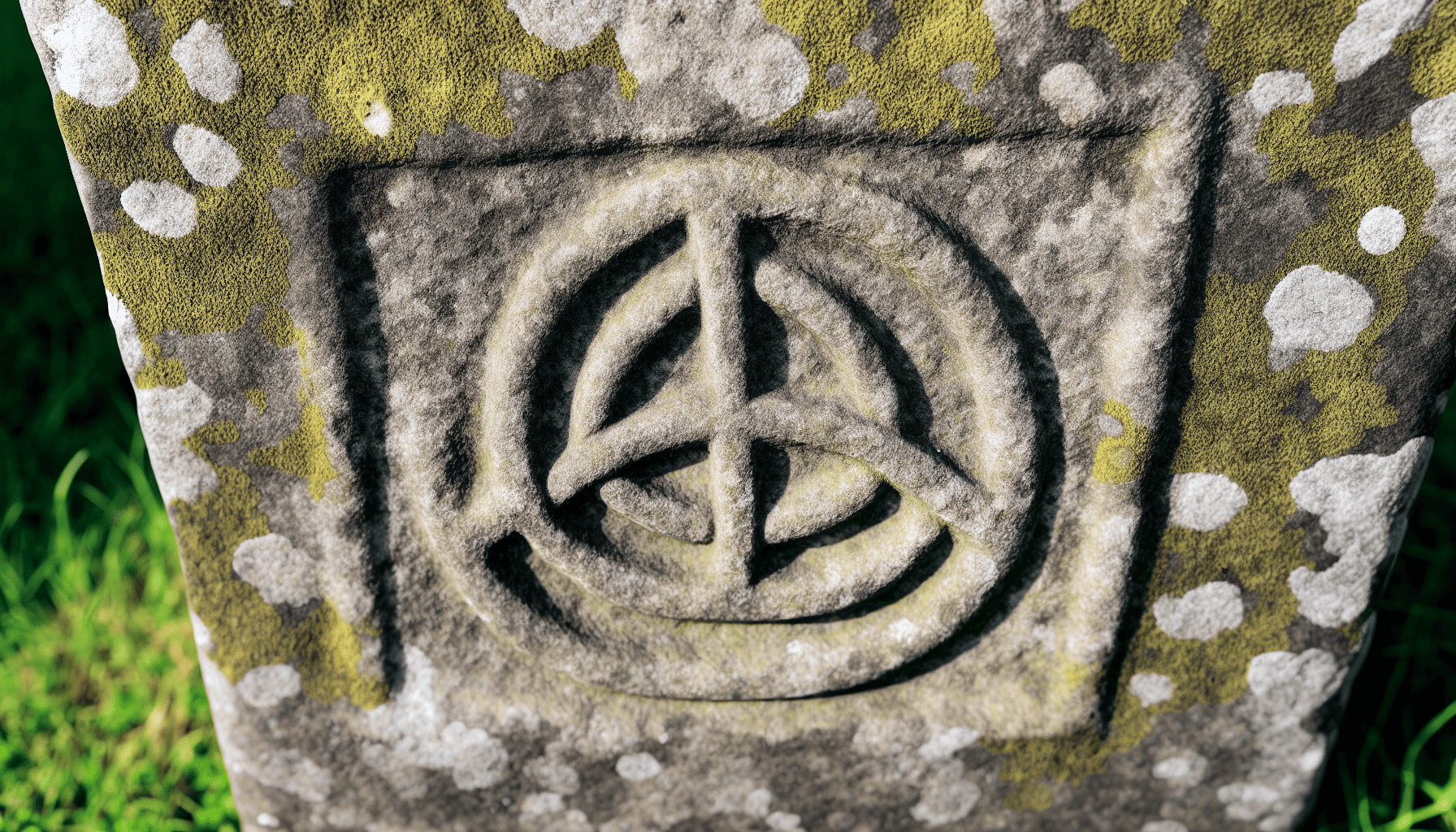
The triquetra’s roots extend back to the era before Christianity. This ancient symbol was employed by ancient Celts before the advent of Christianity, symbolizing various concepts that remain somewhat ambiguous. The triquetra is also found in ancient stone carvings, where it was depicted as a protective and spiritual symbol in sacred and cultural contexts. However, the symbolism of the triquetra evolved and diversified as it was adopted and adapted by different cultures and religions.
Ancient Celtic spirituality played a significant role in shaping the meaning of the triquetra, connecting it to beliefs about nature, the divine, and the interconnectedness of life. Today, Celtic spirituality continues to influence the use and interpretation of the triquetra, keeping its spiritual significance alive in modern practices and symbolism.
Pre-Christian Beginnings
The triquetra symbol was utilized in Celtic cultures to symbolize love, honor, and protection, and its design has ancient Celtic roots that reflect deep historical origins and spiritual beliefs. In Norse culture, it denoted the interconnectivity and balance of all things, particularly the unity of the three realms. This symbol of interconnectedness and unity was a common theme in pre-Christian cultures, underlying the symbol’s depiction of unity and balance.
While the exact origins of the triquetra remain a mystery, it is clear that its significance predates the Christian era. The triquetra’s design is also inspired by natural elements such as land, sea, and sky, which represent the cycles of life and nature in Celtic spirituality. This is evident in the use of the triquetra in various ancient artifacts, stone carvings, and early Germanic coins, among others.
Christian Adaptation
Christianity first adopted the triquetra in the 9th century, evident in the Book of Kells. As christianity spread, the triquetra was incorporated into Christian iconography to symbolize the Holy Trinity—Father, Son, and Holy Spirit—especially by Irish monks and in early Christian manuscripts. It points to its use as a symbol for the Holy Trinity in European Christian culture. In Christian theology, the triquetra symbolizes the Holy Trinity, representing the Father, the Son, and the Holy Spirit, encapsulating the belief in One God revealed in three persons.
The triquetra, also referred to as the Celtic Trinity Knot, holds considerable importance in Irish and Scottish Christian art, particularly since the Celtic revival of the 19th century. The Celtic trinity knot meaning is deeply rooted in its symbolic representation of the Holy Trinity and its use in various religious contexts, including Christian manuscripts and sacred objects.
The Connection to Celtic Mythology
The Trinity Knot’s origins are deeply entwined with the rich tapestry of Celtic mythology, where stories of gods, goddesses, and the natural world abound. In these ancient tales, the Trinity Knot is closely associated with the triple goddess—a powerful figure representing the maiden, mother, and crone. This trinity embodies the cycles of life, death, and rebirth, reflecting the eternal flow of existence and the interconnectedness of all things. The three interlocking loops of the Trinity Knot symbolize not only these stages of womanhood but also the unity of the three realms revered in Celtic belief: land, sea, and sky. These realms are seen as interdependent, each playing a vital role in the balance of the natural world. The design of the Trinity Knot, with its seamless, unbroken lines, beautifully captures this sense of unity and harmony, making it a beloved symbol in Celtic mythology and a reminder of the deep spiritual connections that bind all living things.
Triquetra Symbolism Across Cultures
The triquetra symbol has been embraced by various cultures and religions, each with its unique interpretation and significance. The spiritual significance of the triquetra is evident in its use as a sacred and protective emblem in Celtic spirituality, Christianity, and other traditions. Some of these include:
- In Celtic culture, it is seen as a symbol of unity and protection.
- In Norse tradition, it represents the power of three.
- In Christianity, it symbolizes the Holy Trinity.
The triquetra, composed of three interlocking shapes, holds a profound meaning across cultures and is not confined by geography or time. Its profound significance as a timeless symbol continues to inspire and connect people around the world.
Pagan and Wiccan Connections
In Pagan and Wiccan traditions, the triquetra holds a special place. It is seen as a symbol of the interconnectedness of natural forces and the cycle of life. In recent years, there has been a resurgence of pagan practices in modern Celtic culture, with the triquetra often featured in contemporary rituals and symbols, reflecting its deep connection to ancient belief systems. In Wiccan beliefs, the triquetra represents concepts such as past, present, and future; body, mind, and soul; or the Celtic perspective of land, sea, and sky. Additionally, it is viewed as a protective symbol.
The significance of the triquetra extends to the celebration of the three stages of womanhood. In Pagan and Wiccan beliefs, the triquetra represents the maiden, symbolizing purity and youth, the mother, denoting fertility and stability, and the crone, symbolizing wisdom and repose. It also symbolizes the cycle of life through its representation of the three realms of earth, sea, and sky, or alternatively, the flowing of time through past, present, and future.
Christian Significance
While the triquetra predates Christianity, it has been wholeheartedly embraced by this faith. The triquetra holds significance in Christianity as it symbolizes the Holy Trinity, representing the concept of one God in three persons. This meaning was carried forward from the early Christian era, particularly since the Celtic revival of the 19th century.
The triquetra is also a popular design in Christian art and architecture. Its three interlaced arcs, often enclosed by a circle, are a symbol of the Holy Trinity, signifying the unity of the Father, the Son, and the Holy Spirit. Today, the triquetra continues to be used in Christian art and is often seen in churches and other places of worship.
Regional Variations of the Triquetra
While the Triquetra is a universal symbol within Celtic culture, its design and meaning can vary across different regions, reflecting the unique traditions and beliefs of each Celtic community. In Ireland, the Triquetra is most commonly depicted with three interlocking loops forming a triangular shape, a design that has become synonymous with the Holy Trinity in Christian contexts. This Irish interpretation emphasizes the spiritual unity of the Father, Son, and Holy Spirit, blending ancient Celtic symbolism with Christian iconography. In contrast, Scottish representations of the Triquetra sometimes feature four loops, each one symbolizing one of the four classical elements: earth, air, fire, and water. These regional variations highlight the adaptability and richness of Celtic symbolism, demonstrating how the triquetra symbol can be reimagined to reflect different spiritual beliefs and cultural values. Whether representing the Holy Trinity or the elemental forces of nature, the Triquetra remains a powerful emblem of unity and interconnectedness in Celtic symbolism.
The Modern Revival of the Triquetra
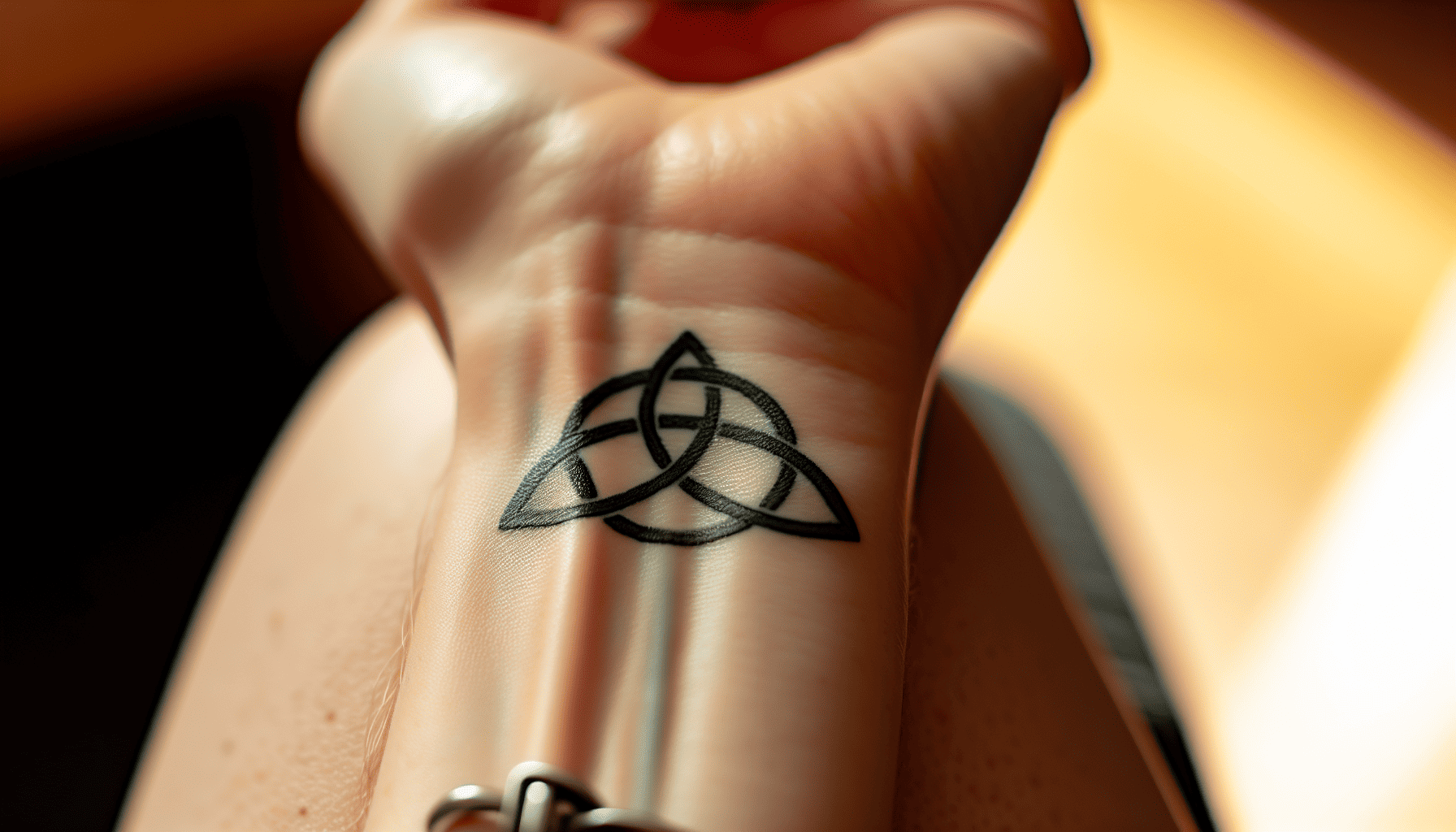
The triquetra is not just a symbol of the past. It has experienced a modern revival, becoming increasingly popular in the 21st century. This ancient symbol is now frequently seen in tattoos, body art, and jewelry, continuing to represent power, unity, and eternity. The triquetra is deeply connected to Irish heritage and is a prominent motif in Irish jewellery, where it symbolizes cultural and spiritual significance.
Whether it’s a tattoo that signifies a personal belief or a piece of jewelry that carries a cultural heritage, the triquetra remains a captivating symbol in contemporary society, with modern interpretations emphasizing its relevance to love, family, and unbreakable connections.
Tattoos and Body Art
Many opt for the triquetra in tattoos, as it signifies a spectrum of individual beliefs and values. For some, it is a symbol of their religious beliefs, such as Christianity, Buddhism, Hinduism, Wiccan, or any Pagan religion. For others, it represents the concept of a trinity, unity, connections, and personal faith. The Celtic triquetra symbol is especially popular in tattoo art due to its historical and spiritual significance in Celtic symbolism.
The designs of triquetra tattoos are as diverse as the people who wear them. Some tattoos feature the traditional triquetra symbol, while others integrate the triquetra with other elements, often enclosed within a circle to underscore the theme of eternity. Regardless of the design, triquetra tattoos are a powerful way to express personal beliefs, heritage, or simply an appreciation for the symbol’s aesthetic appeal.
Jewelry and Accessories
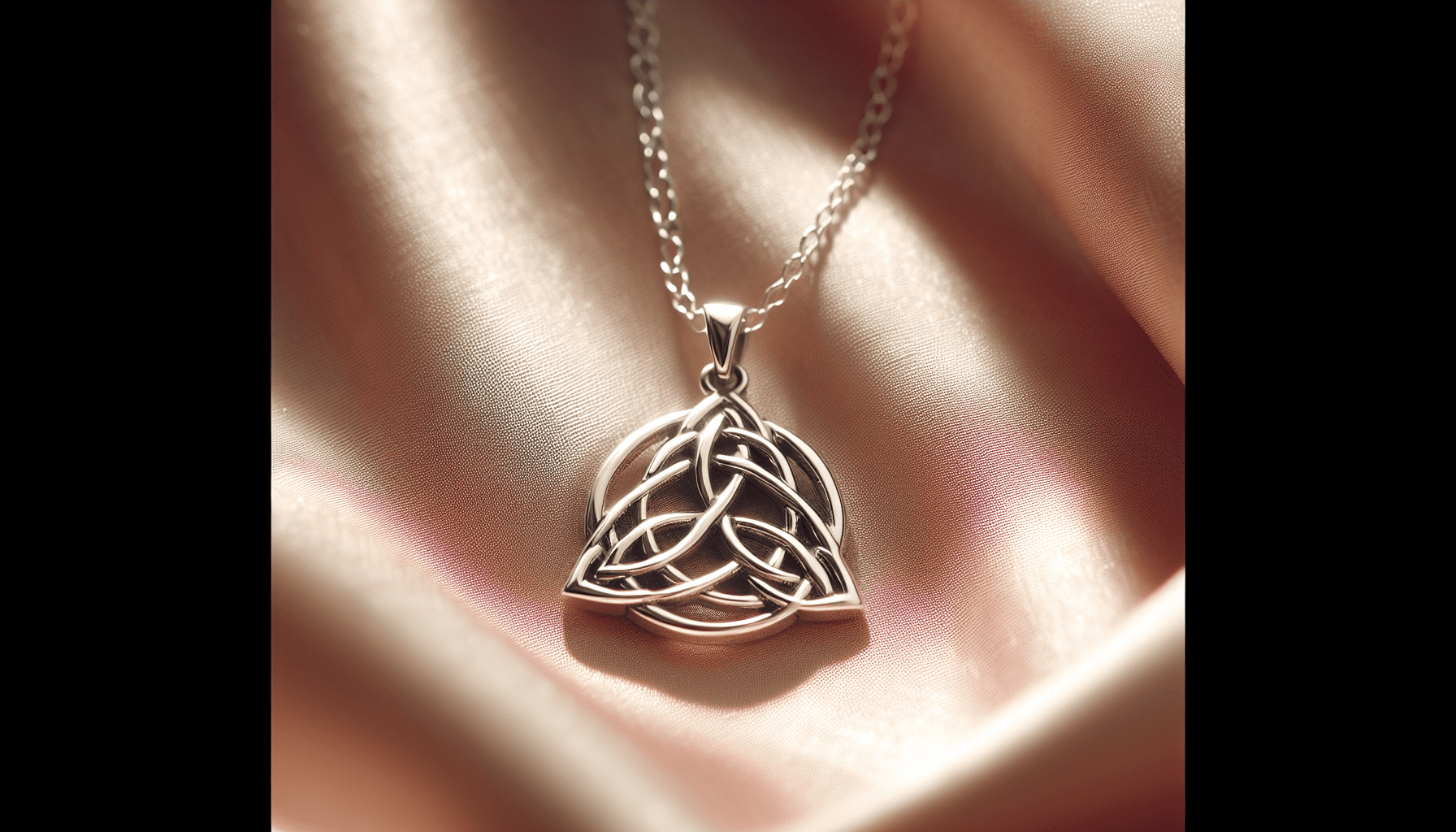
Beyond tattoos, the triquetra is a favored design in jewelry and accessories. It is especially popular in Irish jewellery, where it connects wearers to their heritage and the rich tradition of Celtic symbols. It can be found in various types of jewelry, such as:
- pendants
- earrings
- rings
- bracelets
These items are typically made from materials such as sterling silver, gold plating, stainless steel, and titanium.
The design of trinity knot jewelry symbolizes unity, protection, and eternity by representing the Holy Trinity in Christianity and the three elements of nature in Celtic art and jewelry. Trinity knot jewelry is admired for its deep symbolism, representing the eternal cycle of life, unity, and interconnectedness. Whether it’s a triquetra pendant worn as a symbol of faith, a ring that symbolizes eternal love, or a bracelet that serves as a protective amulet, trinity knot jewelry carries a deep meaning that resonates with many people.
The Art and Craft of Celtic Knotwork
The art of Celtic knotwork, including the triquetra, the Celtic knot, and the Celtic love knot, is a fascinating and intricate craft with deep cultural significance. The trinity knot’s design consists of three interlocking loops forming a triangular shape, often with a circle, symbolizing eternity, unity, and interconnectedness. Originating from the Celtic civilization, this art form is deeply intertwined with their cultural and spiritual traditions. The use of interlace patterns, such as celtic knots, can be historically traced back to the late Roman Empire, where knot patterns began to emerge in the third and fourth centuries AD. The Celts incorporated and adapted these knots into intricate knotwork designs, creating a unique art form that continues to captivate people today.
The creation of a triquetra demands a complicated process necessitating accuracy and skill. Each triquetra is created by weaving a single, continuous line into a three-pointed, interlaced design. This process symbolizes eternity and interconnectedness, reflecting the deep meanings associated with the triquetra.
Creating a Triquetra
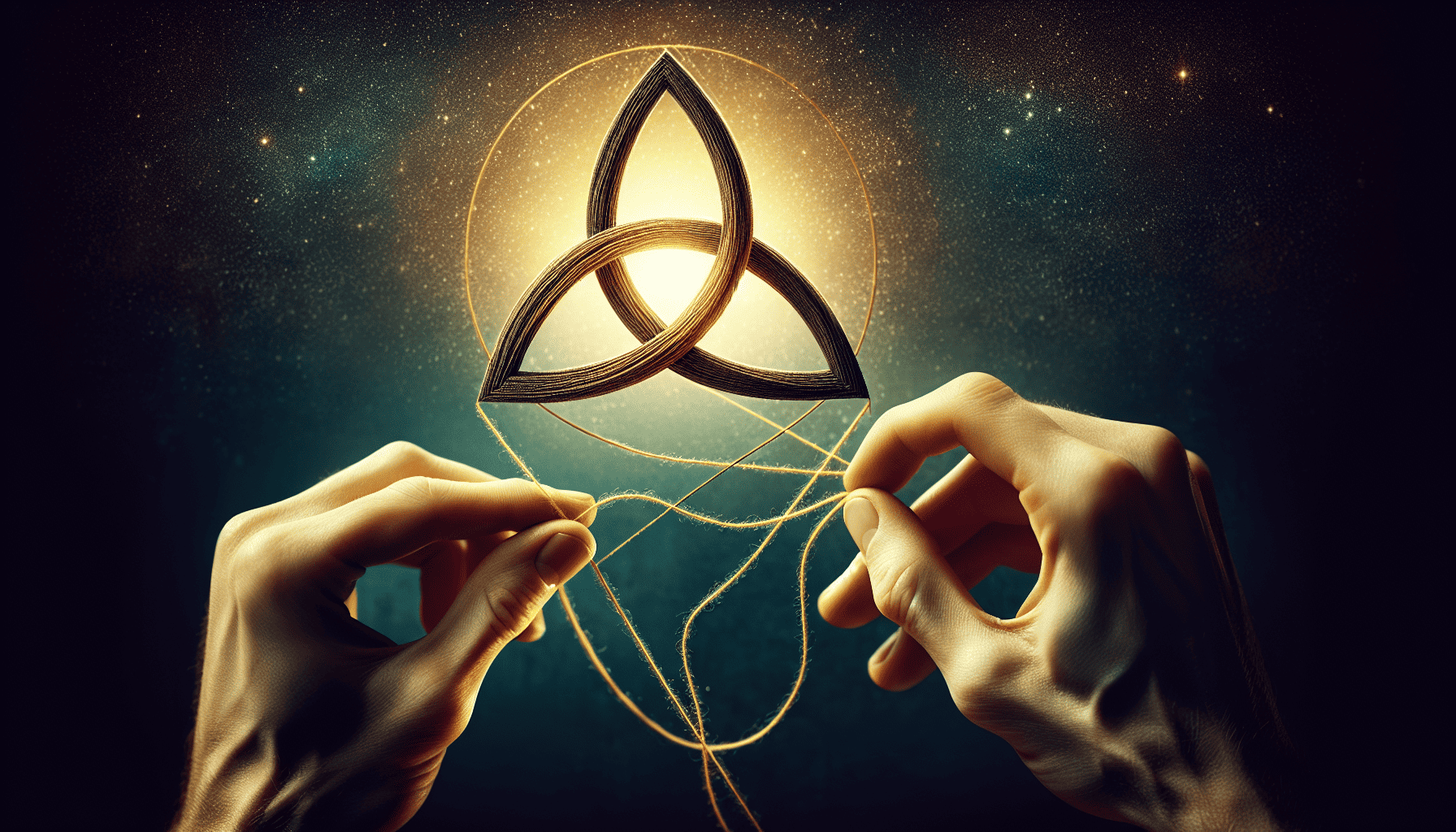
Creating a triquetra involves the following steps:
- Start by drawing a circle, the size of which determines the size of the triquetra.
- Use a compass to draw an equilateral triangle inside the circle.
- Connect the three points of the triangle with curved lines to form the triquetra symbol.
This interlaced design symbolizes eternity and interconnectedness.
The weaving of the triquetra bears significant symbolic meanings, including:
- Unity
- Protection
- The concept of a trinity
- Eternity
- The mystery of creation
Whether it’s crafted on paper, carved into wood, or etched into a piece of jewelry, the triquetra remains a powerful symbol of Celtic heritage.
Related Celtic Symbols
The triquetra is one among numerous enthralling Celtic symbols, each possessing its distinct history and meaning. Other significant Celtic symbols that hold importance similar to the triquetra include:
Celtic symbols such as:
- The Celtic Cross
- The Trinity Knot
- The Dara Knot
- The Triskelion
The Triskelion is also a key symbol representing the unity of Earth, Water, and Fire.
Each of these symbols carries its unique significance. The Celtic Cross is an emblem from the Early Middle Ages that represents the fusion of Christianity and the concept of eternity, while the Awen symbol represents inspirational enlightenment through its depiction of three rays of light. Just like the triquetra, these symbols are deeply rooted in Celtic culture and continue to captivate people with their intricate designs and profound meanings.
The Role of the Triquetra in Meditation
The Triquetra symbol is not only a visual masterpiece but also a profound tool for meditation and spiritual practice. Its three interlocking loops serve as a visual reminder of the unity and balance found in the three realms—land, sea, and sky—as well as the eternal cycles of life, death, and rebirth. During meditation, focusing on the Triquetra symbol can help individuals connect with the deeper spiritual meanings rooted in Celtic mythology and the natural world. The symbol’s harmonious design encourages a sense of balance and spiritual growth, guiding practitioners toward greater self-discovery and inner peace. By meditating on the Triquetra, one can tap into the ancient wisdom of the Celts, drawing inspiration from the interconnectedness of all things and the enduring cycles that shape our existence. This makes the Triquetra a cherished companion on the journey toward spiritual unity and personal transformation.
Summary
The triquetra is a symbol that transcends time and culture. From its origins in ancient Celtic civilization to its adoption by Christian traditions and its modern revival in tattoos and jewelry, the triquetra continues to captivate people with its beauty and profound meanings. The triquetra holds profound significance and spiritual significance, reflecting its deep cultural, spiritual, and symbolic meaning in Irish heritage and Celtic symbolism. It symbolizes unity, protection, and eternity, representing the power of three in various cultures and religions.
Whether you’re drawn to the triquetra for its aesthetic appeal, its deep symbolic meanings, or its cultural heritage, there’s no denying the captivating allure of this ancient Celtic symbol. As we continue to explore and interpret the triquetra, we are reminded of the interconnectedness of life and the power of symbols in expressing our beliefs and values. In many traditions, the triquetra is also used to represent eternity, with its continuous, unbroken lines conveying the idea of an eternal connection.
Frequently Asked Questions
Is the triquetra good luck?
Yes, the triquetra is considered to bring good luck and protection to those who wear it, according to its symbolism in Celtic culture.
What does the triquetra symbol protect?
The triquetra symbol is believed to create an unbreakable circle of protection and is associated with the physical, mental, and spiritual aspects, as well as the mother goddess and moon goddess.
What is the difference between a trinity and a triquetra?
The trinity knot represents the Father, the Son, and the Holy Spirit, while the triquetra symbolizes the three stages of life and has ties to the Maiden, Mother, and Crone. The triquetra meaning varies by context: in Christian tradition, it represents the Holy Trinity—Father, Son, and Holy Spirit—while in pagan and Celtic traditions, it symbolizes cycles such as life, death, and rebirth, as well as natural triads like land, sea, and sky.
Is the triquetra Scottish or Irish?
The triquetra is more closely associated with Irish culture, as it has been significant for Irish people, cultures, and belief systems for a long time. Triquetra symbols are commonly found in Irish culture and jewelry, reflecting their deep cultural and spiritual significance. This is reflected in its use in popular Irish jewelry and its symbolism in Celtic paganism.
How is the triquetra used in modern times?
The triquetra is widely used in modern times, often seen in tattoos, body art, and jewelry, experiencing a revival.