

Located on the Causeway Coastal Route between the Giant’s Causeway and Ballycastle, Ballintoy is a small, picturesque village in County Antrim, Northern Ireland, with only around 200 inhabitants. It lies about 5 miles west of Ballycastle and 17 miles northeast of Coleraine - both a short drive away, making Ballintoy a workable base for exploring the wider coast, including Carrick-a-Rede Rope Bridge, Dunluce Castle, the Giant’s Causeway, the Dark Hedges, and Royal Portrush. Belfast is around an hour’s drive southeast.
The village was originally built around a single street. In Irish, Ballintoy means “the northern townland” (Baile an Tuaigh), and it’s one of the real filming locations for HBO’s Game of Thrones.
Ballintoy falls within Causeway Coast and Glens Borough Council - the local authority formed in 2015 by merging Ballymoney Borough Council, Coleraine Borough Council, Limavady Borough Council, and Moyle District Council (Ballintoy’s former council area). Ballintoy Beach is well-sheltered, making it a good spot for swimming.
Ballintoy Harbour
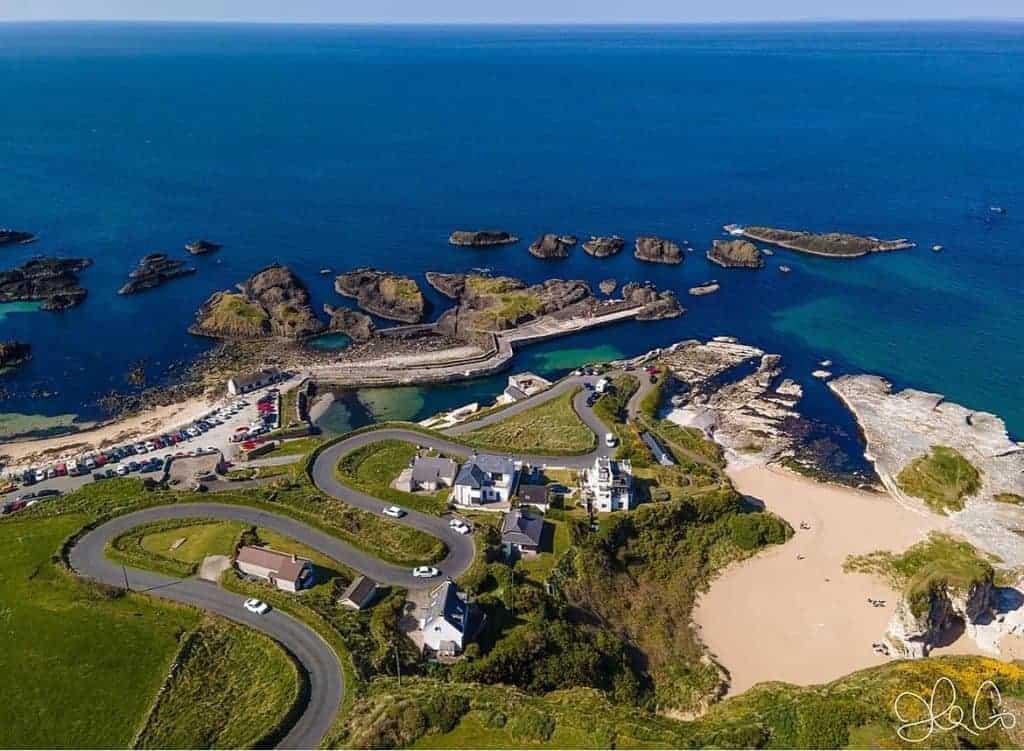 Ballintoy Harbour from the air. Photo: @redandrandom
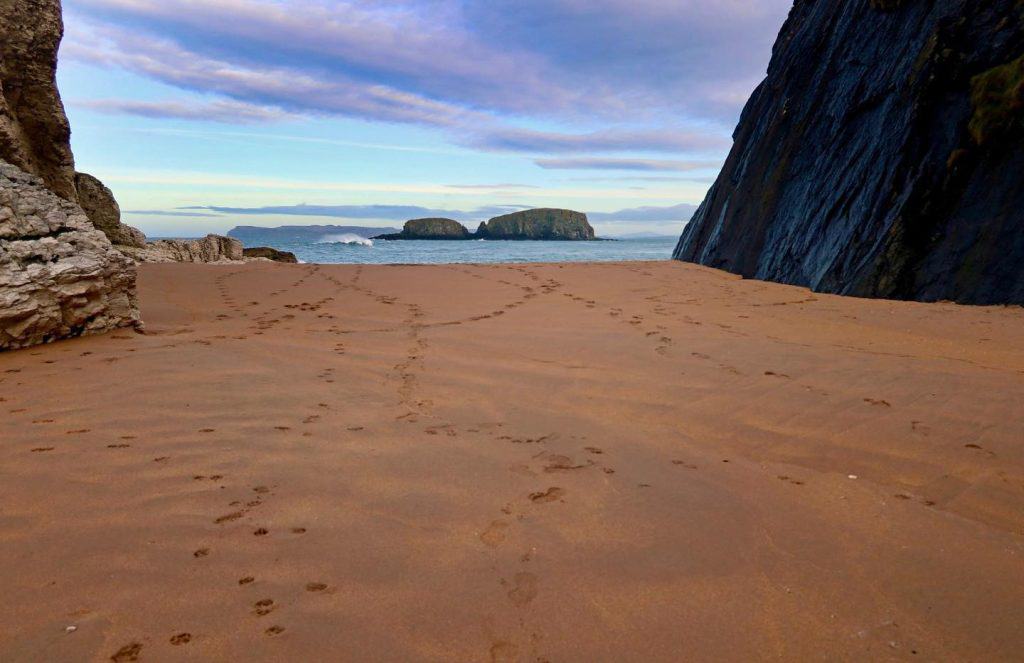 Ballintoy Secret Beach, looking towards Sheep Island. Photo: @anne_kellyart
The small fishing harbour is less than a mile from the village, reached down Harbour Road, a narrow, steep road that winds past Knocksaughey Hill and the white Ballintoy Parish Church. It’s a genuinely scenic route, not just a means to an end.
There’s a car park at the harbour, though it fills up quickly at peak times, particularly during the summer months. The Ballintoy Harbour Café serves homemade Irish fare, and there are picnic facilities nearby if you’d rather bring your own food and eat looking out at the Atlantic.
Ballintoy Harbour and Game of Thrones
Ballintoy Harbour is one of the real, verifiable Game of Thrones filming locations on the Causeway Coast, not just a claimed one. It stood in for Pyke, capital of the Iron Islands (also called Lordsport), in Season 2 - the harbour is where Theon Greyjoy arrives home in Episode 2, and the pebble beach beside it is where he reaffirms his loyalty to House Greyjoy in a baptism scene in Episode 3. Those scenes were filmed on location on 18, 19, and 22 August 2011. The harbour appears again in Season 6, as the setting for Balon Greyjoy’s funeral. If you’ve watched the show, the approach road down past the white parish church and the harbour itself will look immediately familiar.
Ballintoy Secret Beach
The cove immediately beside the harbour, informally known as Ballintoy Secret Beach, looks towards Sheep Island and is worth the short scramble down from the car park. Geologically, it’s a genuinely interesting spot: the Ballintoy Fault runs westward through the harbour and on to Whitepark Bay, with basalt lava (around 60 million years old) sitting directly on top of much older Cretaceous chalk (over 80 million years old) - a vertical displacement of roughly 100 metres, visible in the cliff face for anyone who looks closely. The harbour itself is sheltered by basalt cliffs and a scatter of small rocky islands known locally as the Parks.
Things to Do at Ballintoy
Beyond the harbour and Secret Beach, Ballintoy Church - the small, whitewashed parish church seen on the approach road - is worth a look for its own sake, and Kinbane Castle, a ruined clifftop fort a few miles east, makes an easy add-on for anyone visiting Ballintoy for the day.
Getting There
Ballintoy sits on the B15, part of the wider Causeway Coastal Route, between the Giant’s Causeway and Ballycastle. It’s an easy stop if you’re driving in either direction, and close enough to Carrick-a-Rede Rope Bridge and Dunseverick Castle to combine all three in a single afternoon. There’s no direct rail link; the nearest station is Ballymoney or Coleraine, with a bus or car needed for the final stretch.
Where to Stay and Eat
The Fullerton Arms, in the village itself, is Ballintoy’s best-known guesthouse and restaurant, and a popular stop for walkers and Game of Thrones fans working through the Iron Islands sites. Beyond that, accommodation options are limited to the village’s small scale - most visitors base themselves in nearby Bushmills and treat Ballintoy as a stop on the coast road rather than an overnight destination.


